Animals in Translation: Using the Mysteries of Autism to Decode Animal Behavior
Sign in to keep track of books you’ve read and want to read.
Why would a cow lick a tractor? Why are collies getting dumber? Why do dolphins sometimes kill for fun? How can a parrot learn to spell? How did wolves teach man to evolve?
Read more
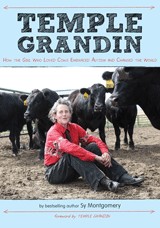
Temple Grandin draws upon a long, distinguished career as an animal scientist and her own experiences with autism to deliver an extraordinary message about how animals act, think, and feel. She has a perspective like that of no other expert in the field, which allows her to offer unparalleled observations and groundbreaking ideas.
People with autism can often think the way animals think, putting them in the perfect position to translate "animal talk." Grandin is a faithful guide into their world, exploring animal pain, fear, aggression, love, friendship, communication, learning, and, yes, even animal genius. The sweep of Animals in Translation is immense and will forever change the way we think about animals.
*includes a Behavior and Training Troubleshooting Guide
Among its provocative ideas, the book:
~argues that language is not a requirement for consciousness—and that animals do have consciousness.
~applies the autism theory of "hyper-specificity" to animals, showing that animals and autistic people are so sensitive to detail that they "can't see the forest for the trees"—a talent as well as a "deficit".
~explores the "interpreter" in the normal human brain that filters out detail, leaving people blind to much of the reality that surrounds them—a reality animals and autistic people see, sometimes all too clearly.
~explains how animals have "superhuman" skills: animals have animal genius.
~compares animals to autistic savants, declaring that animals may in fact be autistic savants, with special forms of genius that normal people do not possess and sometimes cannot even see.
~examines how humans and animals use their emotions to think, to decide, and even to predict the future.
~reveals the remarkable abilities of handicapped people and animals .
~maintains that the single worst thing you can do to an animal is to make it feel afraid.
Liked Animals in Translation: Using the Mysteries of Autism to Decode Animal Behavior? Here’s where I’d start.
These suit anyone who liked Animals in Translation: Using the Mysteries of Autism to Decode Animal Behavior. Sign in and mark a few books for picks shaped around your own taste.
-
 Animal Madness: How Anxious Dogs, Compulsive Parrots, and Elephants in Recovery Help Us Understand Ourselves Shares nonfiction, animals, science
 -
 Animal Wise: The Thoughts and Emotions of Our Fellow Creatures Shares nonfiction, animals, science
 -
 The Emotional Lives of Animals: A Leading Scientist Explores Animal Joy, Sorrow, and Empathy - and Why They Matter Shares animals, nonfiction, science
 -
 The Other End of the Leash: Why We Do What We Do Around Dogs Shares nonfiction, animals, dogs
“People who read Animals in Translation: Using the Mysteries of Autism to Decode Animal Behavior tend to reach for these next.”
“If you want more of the same (science about animals), start with these.”
-
 Why Dogs Hump and Bees Get Depressed: The Fascinating Science of Animal Intelligence, Emotions, Friendship, and Conservation
-
 The Octopus and the Orangutan: New Tales of Animal Intrigue, Intelligence, and Ingenuity
-
 Some We Love, Some We Hate, Some We Eat: Why It's So Hard to Think Straight About Animals
- Pets on the Couch: Neurotic Dogs, Compulsive Cats, Anxious Birds, and the New Science of Animal Psychiatry