
The Nazi War on Cancer
Sign in to keep track of books you’ve read and want to read.
The Barnes & Noble Review
Asking probing questions about why science thrived under fascism, Robert Proctor explores the advances made in cancer research and public health in Hitler's Germany. Several hours before the Germans launched the deadliest campaign in military history in 1941, Adolf Hitler and Joseph Goebbels, the minister of popular enlightenment and propaganda, were discussing the timing of their imminent invasion of the Soviet Union. According to Goebbels' journals, the two worked on Hitler's speech, and marveled at the ways in which they were planning to defeat communism and change the map of Europe. But that night, Hitler and Goebbels also discussed the recent advances in cancer research made by Nazi doctors in their pursuit of a "sanitary utopia." As science historian Robert N. Proctor exposes in his provocative new book The Nazi War on Cancer, the Nazi medical establishment was years ahead of the rest of the world in public health reform and research.
Read more
Proctor is far from being a revisionist historian, and recognizes the extreme sensitivity of his subject matter. In fact, he is a cautious and elegant writer who frequently reminds readers of his earlier book, Racial Hygiene: Medicine Under the Nazis, in which he documents the horrors of Nazi medical experiments. In this book, however, he finds that some Nazi scientific research was actually path-breaking and may have developed some of the era's most successful cancer prevention programs. As Proctor is careful to distinguish, The Nazi War on Canceris not a book that champions Nazi medical practices; rather, it is "abookabout fascism, and a book about science," as the author seeks to understand how "fascism suppressed certain kinds of science&[and] how fascist ideals fostered research directions and lifestyle fashions that look strikingly like those we today might embrace."
Until now, historians' focus on Nazi medical research has traditionally concentrated on political and racial ideology, because "little might appear to be gained by pointing to Nazi success in fighting food dyes, tobacco, or occupational dust." But the extraordinary work conducted during the Wilhelmine and Weimar eras was undeniable German medicine and public health was the envy of the world at that time. In what is perhaps one of Proctor's most astounding revelations, evidence of the link between cigarette smoking and lung cancer was published as early as 1929 by Nazi physician Fritz Lickint, though cigarette incriminating studies didn't appear in England and the United States until 1950. Hitler was a virulent anti-smoker, and his regime launched one of the most aggressive anti-tobacco campaigns of the twentieth century. By 1938, smoking was banned in many offices, hospitals and rest homes, and "no-smoking" cars were established on all German trains by the following year. According to one propaganda poster, Hitler attributed his "performance at work" to his ability to resist both nicotine and alcohol.
Diet was also important to the Nazis, and public health officials strongly promoted the consumption whole-grain breads, vegetables, and fruits, and other foods that were low in fat, high in fiber, and free of artificial colorings and preservatives. Germans were also encouraged to consult their physicians regularly for early cancer detection, and women were taught how to perform breast self-examinations as early as 1936. As one poster caption read: "Every automobile gets a regular checkup; that is obvious. Shouldn't the much more complicated machine of the human body also get regular checkups?"
Why were Nazis so concerned with cancer prevention? Proctor notes that cancer "expressed larger cultural idioms" and became "a metaphor for all that was seen as wrong with society." Because of this, the German body "belonged" to the Fuhrer, and good health was considered a citizen's duty. Because Nazi public health workers attributed improper diet as a major contributor to cancer, the effort to become the master race could only be achieved through healthy living. As one Hitler Youth manual asserted, "Nutrition is not a private matter!"
It is far from Proctor's intention to express the simplistic and irresponsible sentiment that "good can come from evil" by bringing readers' attention to the progress made by Nazi scientists. Instead, this brave and sophisticated account brilliantly evokes the nuances of ethical paradoxes, as Proctor successfully points out our "need to better understand how the routine practice of science can so easily coexist with the routine exercise of cruelty."
Kera Bolonik
Liked The Nazi War on Cancer? Here’s where I’d start.
These suit anyone who liked The Nazi War on Cancer. Sign in and mark a few books for picks shaped around your own taste.
-
 Passions and Tempers: A History of the Humours Shares history, nonfiction, medicine
 -
 Bad Medicine: Doctors Doing Harm Since Hippocrates Shares history, medicine, science
 -
 Influenza 1918: The Worst Epidemic in American History Shares nonfiction, history, medicine
 -
 A Short History of Medicine Shares history, science, nonfiction
“If you want more of the same (history about medical), start with these.”


“If it was the medicine that hooked you, try one of these.”
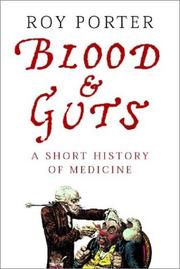

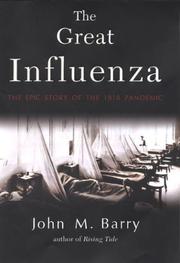

“These start from a similar idea, even if they go somewhere else with it.”
-
 A Cancer Prevention Guide for the Human Race
-
 Merchants of Doubt: How a Handful of Scientists Obscured the Truth on Issues from Tobacco Smoke to Global Warming
-
 Life Is Your Best Medicine: A Woman's Guide to Health, Healing, and Wholeness at Every Age
-
 Pink Ribbons, Inc.: Breast Cancer and the Politics of Philanthropy