A Guide to the Good Life: The Ancient Art of Stoic Joy
Sign in to keep track of books you’ve read and want to read.
One of the great fears many of us face is that despite all our effort and striving, we will discover at the end that we have wasted our life. In A Guide to the Good Life, William B. Irvine plumbs the wisdom of Stoic philosophy, one of the most popular and successful schools of thought in ancient Rome, and shows how its insight and advice are still remarkably applicable to modern lives.
In A Guide to the Good Life, Irvine offers a refreshing presentation of Stoicism, showing how this ancient philosophy can still direct us toward a better life. Using the psychological insights and the practical techniques of the Stoics, Irvine offers a roadmap for anyone seeking to avoid the feelings of chronic dissatisfaction that plague so many of us. Irvine looks at various Stoic techniques for attaining tranquility and shows how to put these techniques to work in our own life. As he does so, he describes his own experiences practicing Stoicism and offers valuable first-hand advice for anyone wishing to live better by following in the footsteps of these ancient philosophers. Readers learn how to minimize worry, how to let go of the past and focus our efforts on the things we can control, and how to deal with insults, grief, old age, and the distracting temptations of fame and fortune. We learn from Marcus Aurelius the importance of prizing only things of true value, and from Epictetus we learn how to be more content with what we have.
Read more
Finally, A Guide to the Good Lifeshows readers how to become thoughtful observers of their own life. If we watch ourselves as we go about our daily business and later reflect on what we saw, we can better identify the sources of distress and eventually avoid that pain in our life. By doing this, the Stoics thought, we can hope to attain a truly joyful life.
Liked A Guide to the Good Life: The Ancient Art of Stoic Joy? Here’s where I’d start.
These suit anyone who liked A Guide to the Good Life: The Ancient Art of Stoic Joy. Sign in and mark a few books for picks shaped around your own taste.
-
 Philosophy for Life: And Other Dangerous Situations Shares philosophy, stoicism, self-help
 -
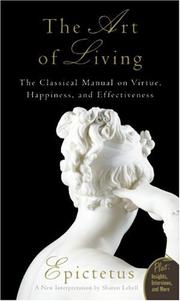 The Art of Living: The Classical Manual on Virtue, Happiness and Effectiveness Shares philosophy, stoicism, nonfiction
 -
 Philosophy As a Way of Life: Spiritual Exercises from Socrates to Foucault Shares philosophy, stoicism, nonfiction
 -
 Musonius Rufus: Lectures and Sayings Shares philosophy, stoicism, nonfiction