Who Lost Russia?: How the World Entered a New Cold War
Sign in to keep track of books you’ve read and want to read.
When the Soviet Union collapsed on December 26, 1991, it looked like the start of a remarkable new era of peace and co-operation. Some even dared to declare the end of history, assuming all countries would converge on enlightenment values and liberal democracy.
Nothing could be further from the truth. Russia emerged from the 1990s battered and humiliated; the parallels with Weimar Germany are striking. Goaded on by a triumphalist West, a new Russia has emerged, with a large arsenal of upgraded weapons, conventional and nuclear, determined to reassert its national interests in the 'near abroad' — Chechnya, Georgia and Ukraine — as well as fighting a proxy war in the Middle East. Meanwhile, NATO is executing large-scale maneuvers and stockpiling weaponry close to Russia's border.
Read more
In this provocative new work, Peter Conradi argues that we have consistently failed to understand Russia and its motives and, in doing so, have made a powerful enemy.
Liked Who Lost Russia?: How the World Entered a New Cold War? Here’s where I’d start.
These suit anyone who liked Who Lost Russia?: How the World Entered a New Cold War. Sign in and mark a few books for picks shaped around your own taste.
-
 The Invention of Russia: From Gorbachev's Freedom to Putin's War Shares russia, nonfiction, history
 -
 On Stalin's Team: The Years of Living Dangerously in Soviet Politics Shares russia, history, nonfiction
 -
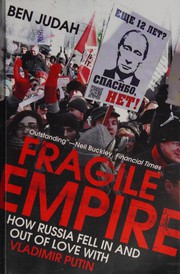 Fragile Empire: How Russia Fell In and Out of Love with Vladimir Putin Shares russia, nonfiction, history
 -
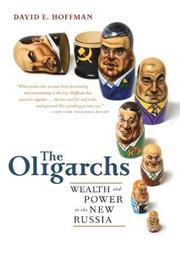 The Oligarchs: Wealth and Power in the New Russia Shares russia, nonfiction, history