Cybertext: Perspectives on Ergodic Literature
Sign in to keep track of books you’ve read and want to read.
Can computer games be great literature? Do the rapidly evolving and culturally expanding genres of digital literature mean that the narrative mode of discourse—novels, films, television series—is losing its dominant position in our culture? Is it necessary to define a new aesthetics of cyborg textuality?
Read more
In Cybertext, Espen Aarseth explores the aesthetics and textual dynamics of digital literature and its diverse genres, including hypertext fiction, computer games, computer-generated poetry and prose, and collaborative Internet texts such as MUDs. Instead of insisting on the uniqueness and newness of electronic writing and interactive fiction, however, Aarseth situates these literary forms within the tradition of "ergodic" literature—a term borrowed from physics to describe open, dynamic texts such as the I Chingor Apollinaire's calligrams, with which the reader must perform specific actions to generate a literary sequence.
Constructing a theoretical model that describes how new electronic forms build on this tradition, Aarseth bridges the widely assumed divide between paper texts and electronic texts. He then uses the perspective of ergodic aesthetics to reexamine literary theories of narrative, semiotics, and rhetoric and to explore the implications of applying these theories to materials for which they were not intended.
Liked Cybertext: Perspectives on Ergodic Literature? Here’s where I’d start.
These suit anyone who liked Cybertext: Perspectives on Ergodic Literature. Sign in and mark a few books for picks shaped around your own taste.
-
 Hamlet on the Holodeck: The Future of Narrative in Cyberspace Shares game studies, nonfiction, games
-
 Twisty Little Passages: An Approach to Interactive Fiction Shares nonfiction, games, game studies
-
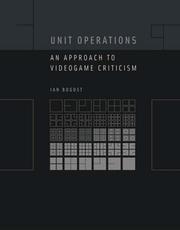 Unit Operations: An Approach to Videogame Criticism Shares game studies, games, video games
-
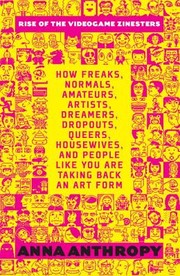 Rise of the Videogame Zinesters: How Freaks, Normals, Amateurs, Artists, Dreamers, Drop-outs, Queers, Housewives, and People Like You Are Taking Back an Art Form Shares nonfiction, games, video games