Ecological Economics: Principles And Applications
Sign in to keep track of books you’ve read and want to read.
Conventional economics is increasingly criticized for failing to reflect the value of clean air and water, species diversity, and social and generational equity. By excluding biophysical and social reality from its analyses and equations, conventional economics seems ill-suited to address problems in a world characterized by increasing human impacts and decreasing natural resources. Ecological Economics is an introductory-level textbook for an emerging paradigm that addresses this fundamental flaw in conventional economics. The book defines a revolutionary transdiscipline that incorporates insights from the biological, physical, and social sciences, and it offers a pedagogically complete examination of this exciting new field. The book provides students with a foundation in traditional neoclassical economic thought, but places that foundation within a new interdisciplinary framework that embraces the linkages among economic growth, environmental degradation, and social inequity. Introducing the three core issues that are the focus of the new transdiscipline — scale, distribution, and efficiency — the book is guided by the fundamental question, often assumed but rarely spoken in
Liked Ecological Economics: Principles And Applications? Here’s where I’d start.
These suit anyone who liked Ecological Economics: Principles And Applications. Sign in and mark a few books for picks shaped around your own taste.
-
 Plenitude: The New Economics of True Wealth Shares economics, environment, nonfiction
 -
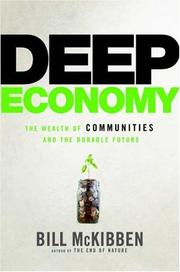 Deep Economy: The Wealth of Communities and the Durable Future Shares economics, environment, nonfiction
 -
 But Will the Planet Notice?: How Smart Economics Can Save the World Shares economics, environment, nonfiction
 -
 Change the Story, Change the Future: A Living Economy for a Living Earth Shares economics, environment, politics