Eqbal Ahmad: Confronting Empire
Sign in to keep track of books you’ve read and want to read.
Edward W. Said once urged the legendary Eqbal Ahmad not to 'leave your works scattered to the winds, or even recorded on tape, but collected and published in several volumes for everyone to read. Then those who don't have the privilege of knowing you will know what a truly remarkable, gifted man you are.'
Read more
Unfortunately, Ahmad died suddenly before Said's wish came to fruition. Now, for the first time, Ahmad's most provocative ideas are available in book form.
In these intimate and wide-ranging conversations, Ahmad discusses nationalism, ethnic conflict, the politics of memory, and liberation struggles around the world.
Praise for Eqbal Ahmad:
"Eqbal Ahmad, perhaps the shrewdest and most original anti-imperialist analyst of Asia and Africa, was a man of enormous charisma and incorruptible ideals. He had an almost instinctive attraction to movements of the oppressed and the persecuted, and a formidable knowledge of history. Arabs, for example, learned more from him about the failures of Arab nationalism than from anyone else. Ahmad was that rare thing, an intellectual unintimidated by power or authority."
-Edward W. Said, author of Culture and Imperialism
"Eqbal Ahmad was a shining example of what a true internationalist should be. Eqbal was at home in the history of all the world's great civilizations. He had an encyclopedic knowledge of states past and present, and he knew that states had a rightful role to play. But he also knew that states existed to serve people, not the other way around, and he had little to do with governments, except as a thorn in their side. To friends, colleagues, and students, however, he gave unstintingly of himself and his time. His example and his memory will inspire many to carry on his work."
-Kofi Annan, Secretary-General of the United Nations
"A very dedicated and honorable activist, Eqbal was right in the middle of everything. He was a student of revolution and imperialism and a very good one."
-Noam Chomsky, MIT
"Eqbal Ahmad was unique in combining compassion for the dispossessed-en masse and one by one; the intellectual capacity to analyze cultural, political, and economic issues on a transnational level; and an ability to raise his always eloquent voice on behalf of constructive and original solutions."
-Victory Navasky, Publisher and Editorial Director, The Nation
Liked Eqbal Ahmad: Confronting Empire? Here’s where I’d start.
These suit anyone who liked Eqbal Ahmad: Confronting Empire. Sign in and mark a few books for picks shaped around your own taste.
-
Crossed Swords: Pakistan, Its Army, and the Wars Within Shares Pakistan, nonfiction, South Asia
-
 Colonialism / Postcolonialism Shares nonfiction, colonialism, politics
 -
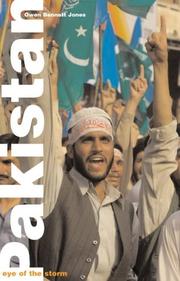 Pakistan: Eye of the Storm Shares Pakistan, South Asia, politics
 -
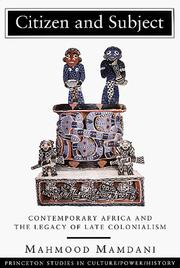 Citizen and Subject: Contemporary Africa and the Legacy of Late Colonialism Shares colonialism, nonfiction, politics