Expert Political Judgment: How Good Is It? How Can We Know?
Sign in to keep track of books you’ve read and want to read.
The intelligence failures surrounding the invasion of Iraq dramatically illustrate the necessity of developing standards for evaluating expert opinion. This book fills that need. Here, Philip E. Tetlock explores what constitutes good judgment in predicting future events, and looks at why experts are often wrong in their forecasts.
Read more
Tetlock first discusses arguments about whether the world is too complex for people to find the tools to understand political phenomena, let alone predict the future. He evaluates predictions from experts in different fields, comparing them to predictions by well-informed laity or those based on simple extrapolation from current trends. He goes on to analyze which styles of thinking are more successful in forecasting. Classifying thinking styles using Isaiah Berlin's prototypes of the fox and the hedgehog, Tetlock contends that the fox—the thinker who knows many little things, draws from an eclectic array of traditions, and is better able to improvise in response to changing events—is more successful in predicting the future than the hedgehog, who knows one big thing, toils devotedly within one tradition, and imposes formulaic solutions on ill-defined problems. He notes a perversely inverse relationship between the best scientific indicators of good judgement and the qualities that the media most prizes in pundits—the single-minded determination required to prevail in ideological combat.
Clearly written and impeccably researched, the book fills a huge void in the literature on evaluating expert opinion. It will appeal across many academic disciplines as well as to corporations seeking to develop standards for judging expert decision-making.
Liked Expert Political Judgment: How Good Is It? How Can We Know?? Here’s where I’d start.
These suit anyone who liked Expert Political Judgment: How Good Is It? How Can We Know?. Sign in and mark a few books for picks shaped around your own taste.
-
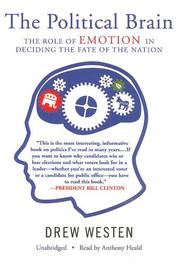 The Political Brain: The Role of Emotion in Deciding the Fate of the Nation Shares politics, psychology, nonfiction
 -
 The Republican Brain: The Science of Why They Deny Science--and Reality Shares politics, nonfiction, psychology
 -
 The Political Mind: Why You Can't Understand 21st-Century American Politics with an 18th-Century Brain Shares politics, nonfiction, psychology
 -
 Behavioral Genetics Shares psychology, nonfiction, science
“People who read Expert Political Judgment: How Good Is It? How Can We Know? tend to reach for these next.”


“If you want more of the same (politics), start with these.”
-
 Our Political Nature: The Evolutionary Origins of What Divides Us
-
 The Evolutionary Psychology Behind Politics: How Conservatism and Liberalism Evolved Within Humans
-
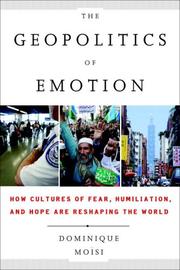 The Geopolitics of Emotion: How Cultures of Fear, Humiliation, and Hope are Reshaping the World
-
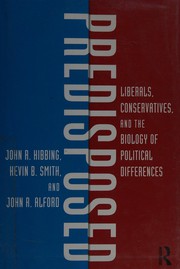 Predisposed: Liberals, Conservatives, and the Biology of Political Differences