
Family Therapy: Concepts and Methods
Sign in to keep track of books you’ve read and want to read.
This update of the 2003 edition begins with a chronology of family therapy in sociopolitical context, 1945-2004. Nichols (clinical psychology, College of William and Mary) and Schwartz (developer of the internal family systems model) introduce family therapy as a way of addressing relationship problems at their source rather than blaming any indivi
Liked Family Therapy: Concepts and Methods? Here’s where I’d start.
These suit anyone who liked Family Therapy: Concepts and Methods. Sign in and mark a few books for picks shaped around your own taste.
-
 Counseling the Culturally Diverse: Theory and Practice Shares psychology, counseling, therapy
-
 Conjoint Family Therapy Shares psychology, counseling, family therapy
-
 Interpersonal Process in Therapy: An Integrative Model Shares psychology, counseling, therapy
-
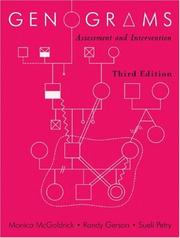 Genograms: Assessment and Intervention Shares family therapy, psychology, counseling
“People who read Family Therapy: Concepts and Methods tend to reach for these next.”


“If you want more of the same (psychology about relationships), start with these.”

“If it was the family therapy that hooked you, try one of these.”



“These start from a similar idea, even if they go somewhere else with it.”
-
 Clinical applications of cognitive therapy
-
 Power, resistance and liberation in counselling and psychotherapy
- An examination of the relationship between clients' attachment experiences, their internal working models of self and others, and therapists' empathy in the outcome of process-experiential and cognitive-behavioural therapies
-
 The psychology of religion and coping