Stephen Hawking's Life Works: The Cambridge Lectures
Sign in to keep track of books you’ve read and want to read.
This series of lectures, given at Cambridge University, introduces listeners to the history of ideas about the Universe as well as today's most important scientific theories about time, space, and the cosmos.
Liked Stephen Hawking's Life Works: The Cambridge Lectures? Here’s where I’d start.
These suit anyone who liked Stephen Hawking's Life Works: The Cambridge Lectures. Sign in and mark a few books for picks shaped around your own taste.
-
 Particle Physics: A Beginner's Guide Shares physics, science, nonfiction
 -
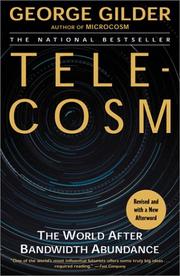 Telecosm: How Infinite Bandwidth Will Revolutionize Our World Shares science, nonfiction
 -
 Nightwork: A History of Hacks and Pranks at MIT Shares nonfiction
 -
 The Particle Garden: Our Universe As Understood By Particle Physicists Shares physics, science, nonfiction