
Empire of the Stars: Obsession, Friendship and Betrayal in the Quest for Black Holes
Sign in to keep track of books you’ve read and want to read.
In August 1930, on a voyage from Madras to London, a young Indian looked up at the stars and contemplated their fate. Subrahmanyan Chandrasekhar—Chandra, as he was called—calculated that certain stars would suffer a strange and violent death, collapsing to virtually nothing. This extraordinary claim, the first mathematical description of black holes, brought Chandra into direct conflict with Sir Arthur Eddington, one of the greatest astrophysicists of the day. Eddington ridiculed the young man's idea at a meeting of the Royal Astronomy Society in 1935, sending Chandra into an intellectual and emotional tailspin—and hindering the progress of astrophysics for nearly forty years.
Read more
Empire of the Stars is the dramatic story of this intellectual debate and its implications for twentieth-century science. Arthur I. Miller traces the idea of black holes from early notions of "dark stars" to the modern concepts of wormholes, quantum foam, and baby universes. In the process, he follows the rise of two great theories—relativity and quantum mechanics—that meet head on in black holes. Empire of the Stars provides a unique window into the remarkable quest to understand how stars are born, how they live, and, most portentously (for their fate is ultimately our own), how they die.
It is also the moving tale of one man's struggle against the establishment—an episode that sheds light on what science is, how it works, and where it can go wrong. Miller exposes the deep-seated prejudices that plague even the most rational minds. Indeed, it took the nuclear arms race to persuade scientists to revisit Chandra's work from the 1930s, for the core of a hydrogen bomb resembles nothing so much as an exploding star. Only then did physicists realize the relevance, truth, and importance of Chandra's work, which was finally awarded a Nobel Prize in 1983.
Set against the waning days of the British Empire and taking us right up to the present, this sweeping history examines the quest to understand one of the most forbidding phenomena in the universe, as well as the passions that fueled that quest over the course of a century.
Liked Empire of the Stars: Obsession, Friendship and Betrayal in the Quest for Black Holes? Here’s where I’d start.
These suit anyone who liked Empire of the Stars: Obsession, Friendship and Betrayal in the Quest for Black Holes. Sign in and mark a few books for picks shaped around your own taste.
-
 Endless Universe: Beyond the Big Bang Shares science, nonfiction, physics
 -
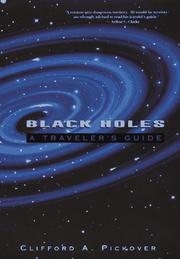 Black Holes: A Traveler's Guide Shares science, physics, nonfiction
 -
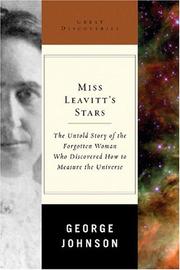 Miss Leavitt's Stars: The Untold Story of the Woman Who Discovered How to Measure the Universe Shares science, nonfiction, astronomy
 -
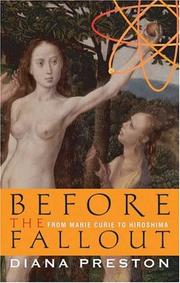 Before the Fallout: From Marie Curie to Hiroshima Shares science, nonfiction, history
“People who read Empire of the Stars: Obsession, Friendship and Betrayal in the Quest for Black Holes tend to reach for these next.”
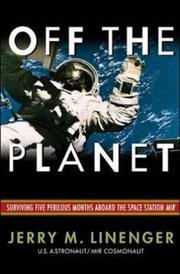

“If you want more of the same (science), start with these.”

“If it was the physics that hooked you, try one of these.”


“These start from a similar idea, even if they go somewhere else with it.”
-
 Black Hole: How an Idea Abandoned by Newtonians, Hated by Einstein, and Gambled On by Hawking Became Loved
-
 What Is Relativity?: An Intuitive Introduction to Einstein's Ideas, and Why They Matter
-
 The Black Hole War: My Battle with Stephen Hawking to Make the World Safe for Quantum Mechanics
-
 The Nature of Space and Time