
Lincoln and Chief Justice Taney: Slavery, Secession, and the President's War Powers
Sign in to keep track of books you’ve read and want to read.
The clashes between President Abraham Lincoln and Chief Justice Roger B. Taney over slavery, secession, and the president's constitutional war powers went to the heart of Lincoln's presidency. James Simon, author of the acclaimed "What Kind of Nation" — an account of the battle between President Thomas Jefferson and Chief Justice John Marshall to define the new nation — brings to vivid life the passionate struggle during the worst crisis in the nation's history, the Civil War. The issues that underlaid that crisis — race, states' rights, and the president's wartime authority — resonate today in the nation's political debate.Lincoln and Taney's bitter disagreements began with Taney's "Dred Scott" opinion in 1857, when the chief justice declared that the Constitution did not grant the black man any rights that the white man was bound to honor. In the famous Lincoln-Douglas debates, Lincoln attacked the opinion as a warped judicial interpretation of the Framers' intent and accused Taney of being a member of a pro-slavery national conspiracy.
In his first inaugural address, President Lincoln insisted that the South had no legal right to secede. Taney, who administered the oath of office to Lincoln, believed that the South's secession was legal and in the best interests of both sections of the country.
Read more
Once the Civil War began, Lincoln broadly interpreted his constitutional powers as commander in chief to prosecute the war, suspending the writ of habeas corpus, censoring the mails, and authorizing military courts to try civilians for treason. Taney opposed every presidential wartime initiative and openly challenged Lincoln's suspension of the writ of habeas corpus. He accused thepresident of assuming dictatorial powers in violation of the Constitution. Lincoln ignored Taney's protest, convinced that his actions were both constitutional and necessary to preserve the Union.
Almost 150 years after Lincoln's and Taney's deaths, their words and actions reverberate in constitutional debate and political battle. "Lincoln and Chief Justice Taney" tells their dramatic story in fascinating detail.
Liked Lincoln and Chief Justice Taney: Slavery, Secession, and the President's War Powers? Here’s where I’d start.
These suit anyone who liked Lincoln and Chief Justice Taney: Slavery, Secession, and the President's War Powers. Sign in and mark a few books for picks shaped around your own taste.
-
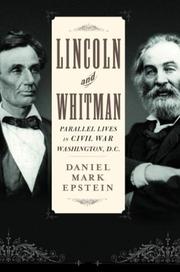 Lincoln and Whitman: Parallel Lives in Civil War Washington Shares lincoln, civil war, american history
 -
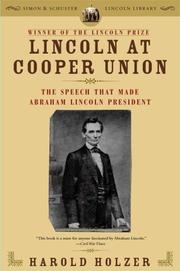 Lincoln at Cooper Union: The Speech That Made Abraham Lincoln President Shares lincoln, civil war, history
 -
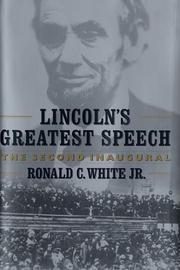 Lincoln's Greatest Speech: The Second Inaugural Shares lincoln, civil war, american history
 -
 Lincoln President-Elect: Abraham Lincoln and the Great Secession Winter, 1860-1861 Shares lincoln, civil war, american history
“People who read Lincoln and Chief Justice Taney: Slavery, Secession, and the President's War Powers tend to reach for these next.”
“If you want more of the same (history about american history), start with these.”

“If it was the lincoln that hooked you, try one of these.”

“These start from a similar idea, even if they go somewhere else with it.”
-
 All the Laws but One: Civil Liberties in Wartime
-
 The Fate of Liberty: Abraham Lincoln and Civil Liberties
-
 A People's History of the Supreme Court: The Men and Women Whose Cases and Decisions Have Shaped Our Constitution
-
 Crisis and Command: A History of Executive Power from George Washington to George W. Bush