The J Curve: A New Way to Understand Why Nations Rise and Fall
Sign in to keep track of books you’ve read and want to read.
What "Freakonomics" does for understanding the economy, "The J Curve" does for better understanding how nations behave. The J curve is a visual tool that allows us to see at a glance why some crucial countries are in crisis and unstable while others are prosperous and politically solid. In this imaginative, playful, and practical guide, Ian Bremmer, an expert on the politics of international business, turns conventional wisdom on its head. He reveals how the United States can begin more successfully to act in its own interests. But "The J Curve" is not only for policymakers and their critics. It can help investors better manage the risks they face abroad. It answers puzzling questions we all have. Why does North Korea seem to invite a military conflict it can't possibly survive? Why is India so surprisingly stable? What are the internal pressures eroding stability in Saudi Arabia? How long can China's politics resist the pressure for change provoked by the country's economic revolution? Why are Iran's ruling clerics trying to push their nation toward international isolation? What will happen to Israeli democracy when demographic pressures change the balance of political power within? And crucially, how should the United States respond to the challenges posed by these questions?
Read more
U.S. policymakers have sought to manage security threats with a simple formula: reward your friends and punish your enemies. Has it worked? The U.S. imposed harsh sanctions on Saddam Hussein's Iraq and isolated it from the international community. This strengthened the dictator's grip on the Iraqi people and the country's wealth. The world now faces a similar dilemma in Iran. Will the United States continueto try to isolate that country or can Iran be guided into the international mainstream, allowing its people eventually to directly challenge their harsh leaders?
Bremmer's tour of the nations of the world — our friends, our foes, and others in between — shows us how to see the world fresh, get rid of shopworn attitudes, and discover a new and useful way of thinking.
Liked The J Curve: A New Way to Understand Why Nations Rise and Fall? Here’s where I’d start.
These suit anyone who liked The J Curve: A New Way to Understand Why Nations Rise and Fall. Sign in and mark a few books for picks shaped around your own taste.
-
 Illicit: How Smugglers, Traffickers, and Copycats are Hijacking the Global Economy Shares nonfiction, economics, politics
 -
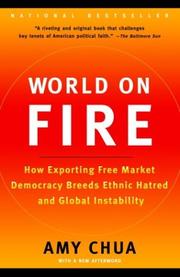 World on Fire: How Exporting Free Market Democracy Breeds Ethnic Hatred and Global Instability Shares nonfiction, economics, politics
 -
 One World: The Ethics of Globalization Shares politics, economics, political science
 -
 That Used to Be Us: How America Fell Behind in the World It Invented and How We Can Come Back Shares nonfiction, economics, politics
“People who read The J Curve: A New Way to Understand Why Nations Rise and Fall tend to reach for these next.”

“If you want more of the same (politics), start with these.”
-
 The Crash of 2016: The Plot to Destroy America--and What We Can Do to Stop It
-
 The Great American Stickup: How Reagan Republicans and Clinton Democrats Enriched Wall Street While Mugging Main Street
-
 FairTax: The Truth: Answering the Critics
-
 Vultures' Picnic: In Pursuit of Petroleum Pigs, Power Pirates, and High-Finance Carnivores