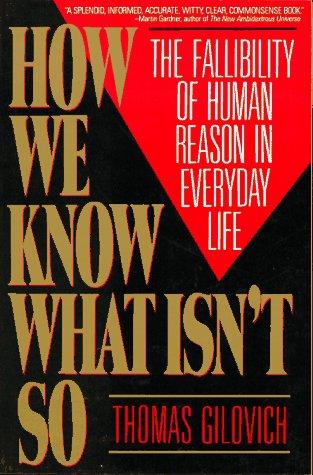
How We Know What Isn't So: The Fallibility of Human Reason in Everyday Life
Sign in to keep track of books you’ve read and want to read.
Thomas Gilovich offers a wise and readable guide to the fallacy of the obvious in everyday life.
When can we trust what we believe—that "teams and players have winning streaks," that "flattery works," or that "the more people who agree, the more likely they are to be right"—and when are such beliefs suspect? Thomas Gilovich offers a guide to the fallacy of the obvious in everyday life. Illustrating his points with examples, and supporting them with the latest research findings, he documents the cognitive, social, and motivational processes that distort our thoughts, beliefs, judgments and decisions. In a rapidly changing world, the biases and stereotypes that help us process an overload of complex information inevitably distort what we would like to believe is reality. Awareness of our propensity to make these systematic errors, Gilovich argues, is the first step to more effective analysis and action.
Liked How We Know What Isn't So: The Fallibility of Human Reason in Everyday Life? Here’s where I’d start.
These suit anyone who liked How We Know What Isn't So: The Fallibility of Human Reason in Everyday Life. Sign in and mark a few books for picks shaped around your own taste.
-
 Irrationality Shares psychology, nonfiction, science
 -
 Don't Believe Everything You Think: The 6 Basic Mistakes We Make in Thinking Shares psychology, nonfiction, science
 -
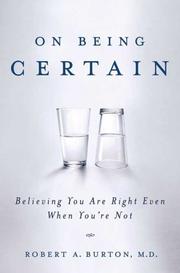 On Being Certain: Believing You Are Right Even When You're Not Shares psychology, nonfiction, science
 -
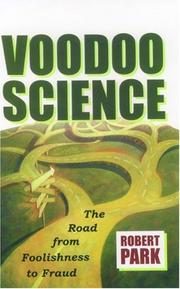 Voodoo Science: The Road from Foolishness to Fraud Shares science, nonfiction, skepticism