Time and Narrative, Volume 1
Time and Narrative series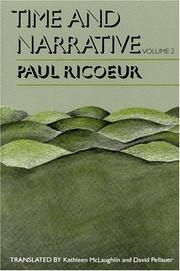 Time and Narrative, Volume 2(1983) →
Sign in to keep track of books you’ve read and want to read.
Time and Narrativebuilds on Paul Ricoeur's earlier analysis, in The Rule of Metaphor, of semantic innovation at the level of the sentence. Ricoeur here examines the creation of meaning at the textual level, with narrative rather than metaphor as the ruling concern.
Read more
Ricoeur finds a "healthy circle" between time and narrative: time is humanized to the extent that it portrays temporal experience. Ricoeur proposes a theoretical model of this circle using Augustine's theory of time and Aristotle's theory of plot and, further, develops an original thesis of the mimetic function of narrative. He concludes with a comprehensive survey and critique of modern discussions of historical knowledge, understanding, and writing from Aron and Mandelbaum in the late 1930s to the work of the Annales school and that of Anglophone philosophers of history of the 1960s and 1970s.
"This work, in my view, puts the whole problem of narrative, not to mention philosophy of history, on a new and higher plane of discussion."—Hayden White, History and Theory
"Superb. . . . A fine point of entrance into the work of one of the eminent thinkers of the present intellectual age."—Joseph R. Gusfield, Contemporary Sociology
Liked Time and Narrative, Volume 1? Here’s where I’d start.
These suit anyone who liked Time and Narrative, Volume 1. Sign in and mark a few books for picks shaped around your own taste.