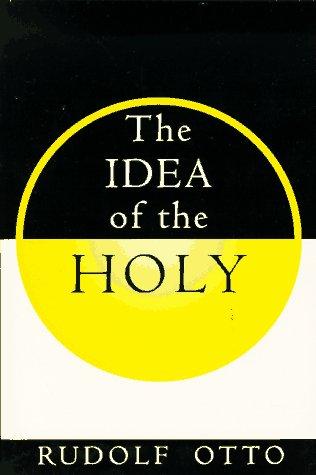
The Idea of the Holy
Sign in to keep track of books you’ve read and want to read.
Since the English translation first appeared in 1923, Rudolf Otto's volume has established itself as a classic in the field of religious philosophy. It offers an in-depth inquiry into the non-rational factor in the idea of the divine and its relation to the rational.
Liked The Idea of the Holy? Here’s where I’d start.
These suit anyone who liked The Idea of the Holy. Sign in and mark a few books for picks shaped around your own taste.
-
 On Religion: Speeches to Its Cultured Despisers Shares religion, philosophy, theology
 -
 The Meaning and End of Religion Shares religion, philosophy, religious studies
 -
 The Sacred and the Profane: The Nature of Religion Shares religion, philosophy, religious studies
 -
 On Religion Shares religion, philosophy, theology
“People who read The Idea of the Holy tend to reach for these next.”
“If you want more of the same (philosophy about religion), start with these.”
“If it was the religion that hooked you, try one of these.”
-
 Saving God: Religion After Idolatry
-
 God in Proof: The Story of a Search from the Ancients to the Internet
-
 Varieties of Religion Today: William James Revisited (Institute for Human Sciences Vienna Lecture) (Institute for Human Sciences, Vienna Lectures Series)
-
 Reason, Faith, and Revolution: Reflections on the God Debate