Explaining English Grammar
Oxford Handbooks for Language Teachers series
Sign in to keep track of books you’ve read and want to read.
A guide to explaining grammar for teachers of English as a second or foreign language.
Having to explain a grammar point can be daunting for teachers. The kinds of explanations that will help language students aren't always the ones you will find in a traditional, 'academic' grammar book or guide. Instead, Explaining English Grammar is a pedagogical guide, designed to help explain the 'whys' as well as the 'hows' of English grammar.
Read more
The book is organized into ten chapters. Each chapter covers a specific grammar topic. After an introductory chapter, the topics covered are:
- Articles
- Tense and aspect
- Modals
- Conditionals
- Prepositions and particles
- Indirect objects
- Infinitives and gerunds
- Relative clauses
- Direct and indirect speech
This sequence is designed to cover the more basic topics first, and then to go into more complex areas. However, the chapters are also free-standing, so you can read them in any order - or leave some out - if you prefer.
Each chapter has a similar structure.
- First there is a section that describes and gives examples of basic forms and structures. These descriptions and examples are based on Corpus research, which makes it possible to say that one form is typically used more often than another in real texts.
- The next section moves on to look at how we use different structures to convey different basic meanings. These descriptions draw on research in semantics.
- Finally, there is a section on 'meaning in context' - in other words, the ways in which these meanings are affected by the context in which they are used, and how they are used to convey information. Again, this section is informed by research in both pragmatics and discourse analysis.
You can find additional information - and references to the research studies referred to - in 'Further reading' sections at the end of each chapter.
Also, after each section, there are summary boxes of the main points, followed by exercises that you can do on your own and/ or discuss with fellow trainees. (There are answers to these questions in an Appendix.) At the end of each chapter, there is a section containing discussion topics and projects for further investigation, and another section with ideas for classroom exercises, activities, and tasks.
Liked Explaining English Grammar? Here’s where I’d start.
These suit anyone who liked Explaining English Grammar. Sign in and mark a few books for picks shaped around your own taste.
-
 Second Language Acquisition: An Introductory Course Shares linguistics, tesol, language
 -
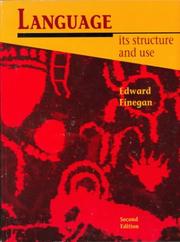 Language: Its Structure and Use Shares linguistics, language, tesol
 -
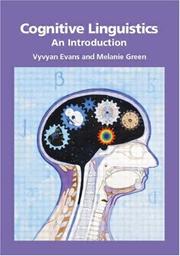 Cognitive Linguistics: An Introduction Shares linguistics, language, nonfiction
 -
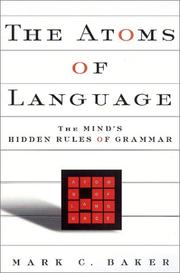 The Atoms Of Language: The Mind's Hidden Rules Of Grammar Shares linguistics, language, nonfiction