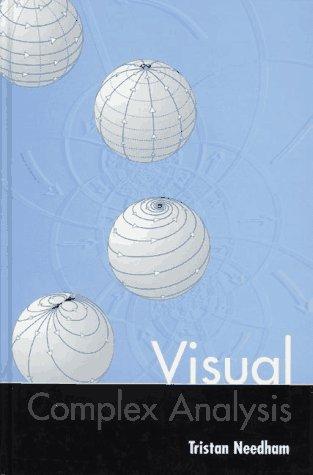
Cover of Visual Complex Analysis

Visual Complex Analysis

This radical first course on complex analysis brings a beautiful and powerful subject to life by consistently using geometry (not calculation) as the means of explanation. Aimed at undergraduate students in mathematics, physics, and engineering, the book's intuitive explanations, lack of advanced prerequisites, and consciously user-friendly prose style will help students to master the subject more readily than was previously possible. The key to this is the book's use of new geometric arguments in place of the standard calculational ones. These geometric arguments are communicated with the aid of hundreds of diagrams of a standard seldom encountered in mathematical works. A new approach to a classical topic, this work will be of interest to students in mathematics, physics, and engineering, as well as to professionals in these fields.

Audience
adult
Length
epic · 616 pages

Click a tag to see books like this one that share it. Point at it (on a phone, tap it) for less of it instead.

Read it? Sign in to help tag it.

Liked Visual Complex Analysis? Here’s where I’d start.

These suit anyone who liked Visual Complex Analysis. Sign in and mark a few books for picks shaped around your own taste.
  1. The Princeton Companion to Mathematics Shares math, mathematics, maths
  2. Ordinary Differential Equations Shares math, mathematics, maths
  3. Proofs from THE BOOK Shares math, mathematics, maths
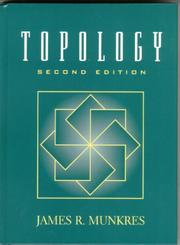
  4. Topology Shares math, mathematics, maths

“People who read Visual Complex Analysis tend to reach for these next.”

  1. Real and Complex Analysis
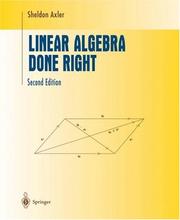
  2. Linear Algebra Done Right
  3. Probability Theory: The Logic of Science
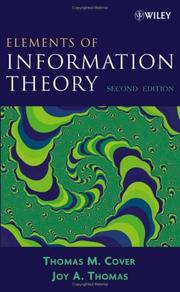
  4. Elements of Information Theory

“If you want more of the same (science), start with these.”

  1. Topics in Algebra
  2. Counterexamples in Analysis
  3. Introduction to Linear Algebra
  4. The Variational Principles of Mechanics

“If it was the math that hooked you, try one of these.”

  1. Concepts of Modern Mathematics
  2. Mathematics for the Nonmathematician (Books Explaining Science)
  3. Gamma: Exploring Euler's Constant
  4. The Fabulous Fibonacci Numbers

“These start from a similar idea, even if they go somewhere else with it.”

  1. Linear and Geometric Algebra
  2. Gravitation
  3. Solid State Physics
  4. Introduction to Real Analysis