Flat Broke with Children: Women in the Age of Welfare Reform
Sign in to keep track of books you’ve read and want to read.
Hailed as a great success, welfare reform resulted in a dramatic decline in the welfare rolls—from 4.4 million families in 1996 to 2 million in 2003. But what does this "success" look like to the welfare mothers and welfare caseworkers who experienced it? In Flat Broke With Children, Sharon Hays tells us the story of welfare reform from inside the welfare office and inside the lives of welfare mothers, describing the challenges that welfare recipients face in managing their work, their families, and the rules and regulations of welfare reform.
Read more
Welfare reform, experienced on the ground, is not a rosy picture. The majority of adult welfare clients are mothers—over 90 percent—and the time limits imposed by welfare reform throw millions of these mostly unmarried, desperate women into the labor market, where they must accept low wages, the most menial work, the poorest hours, with no benefits, and little flexibility. Hays provides a vivid portrait of their lives—debunking many of the stereotypes we have of welfare recipients—but she also steps back to explore what welfare reform reveals about the meaning of work and family life in our society. In particular, she argues that an inherent contradiction lies at the heart of welfare policy, which emphasizes traditional family values even as its ethic of "personal responsibility" requires women to work and leave their children in childcare or at home alone all day long.
Hays devoted three years to visiting welfare clients and two welfare offices, one in a medium-sized town in the Southeast, another in a large, metropolitan area in the West. Drawing on this hands-on research, Flat Broke With Childrenis the first book to explore the impact of welfare reform on motherhood, marriage, and work in women's lives, and the first book to offer us a portrait of how welfare reform plays out in thousands of local welfare offices and in millions of homes across the nation.
Liked Flat Broke with Children: Women in the Age of Welfare Reform? Here’s where I’d start.
These suit anyone who liked Flat Broke with Children: Women in the Age of Welfare Reform. Sign in and mark a few books for picks shaped around your own taste.
-
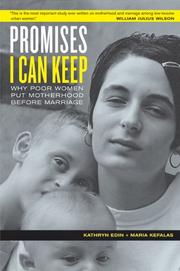 Promises I Can Keep: Why Poor Women Put Motherhood Before Marriage Shares sociology, nonfiction, feminism
 -
 American Dream: Three Women, Ten Kids, and a Nation's Drive to End Welfare Shares nonfiction, sociology, poverty
 -
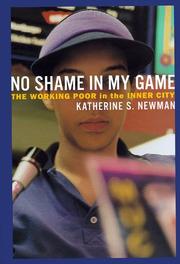 No Shame in My Game: The Working Poor in the Inner City Shares sociology, nonfiction, poverty
 -
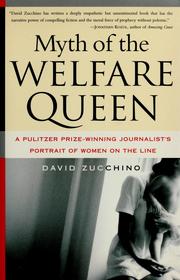 Myth of the Welfare Queen: A Pulitzer Prize-Winning Journalist's Portrait of Women on the Line Shares sociology, nonfiction, feminism
“People who read Flat Broke with Children: Women in the Age of Welfare Reform tend to reach for these next.”
-
 Women without Class: Girls, Race, and Identity
-
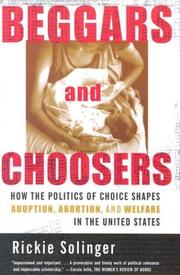 Beggars and Choosers: How the Politics of Choice Shapes Adoption, Abortion, and Welfare in the United States
-
 The Truly Disadvantaged: The Inner City, the Underclass, and Public Policy
-
 Ain't No Makin' It: Aspirations and Attainment in a Low-Income Neighborhood