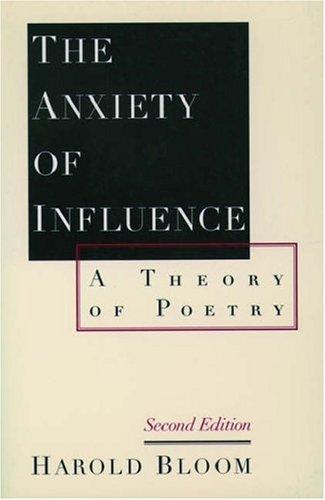
The Anxiety of Influence: A Theory of Poetry
Sign in to keep track of books you’ve read and want to read.
Harold Bloom's The Anxiety of Influence has cast its long shadow of influence since it was first published in 1973. Through an insightful study of Romantic poets, Bloom puts forth his central vision of the relations between precursors and the individual artist. His argument that all literary texts are a strong misreading of those that precede them had an enormous impact on the practice of criticism and post-structuralist literary theory. The book remains a central work of criticism for all students of literature. Written in a moving personal style, anchored by concrete examples, and memorable quotations, this second edition of Bloom's classic work maintains that the anxiety of influence cannot be evaded - neither by poets nor by responsible readers and critics. A new introduction, centering upon Shakespeare and Marlowe explains the genesis of Bloom's thinking, and the subsequent influence of the book on literary criticism of the past quarter of a century.
Liked The Anxiety of Influence: A Theory of Poetry? Here’s where I’d start.
These suit anyone who liked The Anxiety of Influence: A Theory of Poetry. Sign in and mark a few books for picks shaped around your own taste.
-
 The Well Wrought Urn: Studies in the Structure of Poetry Shares poetry, literary criticism, literary theory
 -
 ABC of Reading Shares poetry, criticism, literary criticism
 -
 Anatomy of Criticism Shares literary criticism, criticism, nonfiction
 -
 Axel's Castle: A Study of the Imaginative Literature of 1870-1930 Shares literary criticism, criticism, nonfiction