The Culture of Critique: An Evolutionary Analysis of Jewish Involvement in Twentieth-Century Intellectual and Political Movements
Sign in to keep track of books you’ve read and want to read.
MacDonald provides a theoretical analysis and review of data on the widespread tendency among highly influential, Jewish-dominated intellectual movements to develop radical critiques of gentile culture that are compatible with the continuity of Jewish identification. These movements are viewed as the outcome of the fact that Jews and gentiles have different interests in the construction of culture and in various public policy issues (e.g. immigration policy, Israel). Several of these movements attempt to combat anti-Semitism by advocating social categorization processes in which the Jew/gentile distinction is minimized in importance. There is also a tendency to develop theories of anti-Semitism in which ethnic differences and resource competition are of minimal importance. From the perspective of the intellectual structures developed by these movements, anti-Semitism is analyzed as an indication of psychopathology among gentiles. In some cases, these movements appear to be attempts to develop a fundamental restructuring of the intellectual basis of gentile society in ways conducive to the continued existence of Judaism.
Read more
Particular attention is paid to Boasian anthropology, psychoanalysis, leftist political ideology and behavior, and the Frankfurt School of Social Research. Each of these movements can be characterized as an authoritarian political movement centered around a charismatic leader who strongly identified as a Jew and who was idolized by his disciples who were also predominantly Jewish. Regarding immigration policy, Jewish political and intellectual activity was motivated less by a desire for higher levels of Jewish immigration than by opposition to the implicit theory that America should be dominated by individuals with northern and western European ancestry. Jewish policy was aimed at developing an America charcterized by cultural pluralism and populated by groups of people from all parts of the world rather than by a homogeneous Christian culture and populated largely by people of European descent. This is a controversial analysis of particular interest to those concerned with evolutionary approaches to human behavior, with Judaica, and with an evolutionary perspective on history and psychology.
Liked The Culture of Critique: An Evolutionary Analysis of Jewish Involvement in Twentieth-Century Intellectual and Political Movements? Here’s where I’d start.
These suit anyone who liked The Culture of Critique: An Evolutionary Analysis of Jewish Involvement in Twentieth-Century Intellectual and Political Movements. Sign in and mark a few books for picks shaped around your own taste.
-
White Identity: Racial Consciousness in the 21st Century Shares politics, alt right, alternative right
-
 My Awakening: A Path to Racial Understanding Shares politics, political, race
 -
 Archeofuturism Shares alternative right, politics, alt right
 -
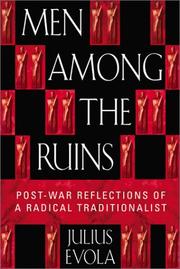 Men Among the Ruins: Post-War Reflections of a Radical Traditionalist Shares politics, alternative right, nonfiction
“People who read The Culture of Critique: An Evolutionary Analysis of Jewish Involvement in Twentieth-Century Intellectual and Political Movements tend to reach for these next.”


“If you want more of the same (history about politics), start with these.”
-
 The Disuniting of America: Reflections on a Multicultural Society
-
 A Question of Torture: CIA Interrogation from the Cold War to the War on Terror
-
 How Civilizations Die
- Why Liberals Win the Culture Wars (Even When They Lose Elections): The Battles That Define America from Jefferson's Heresies to Gay Marriage