
Eugenics and Other Evils: An Argument Against the Scientifically Organized State
Sign in to keep track of books you’ve read and want to read.
In the second decade of the twentieth century, an idea became all too fashionable among those who feel it is their right to set social trends. Wealthy families took it on as a pet cause, generously bankrolling its research. The New York Times praised it as a wonderful "new science." Scientists, such as the brilliant plant biologist, Luther Burbank, praised it unashamedly. Educators as prominent as Charles Elliot, President of Harvard University, promoted it as a solution to social ills. America's public schools did their part. In the 1920s, almost three-fourths of high school social science textbooks taught its principles. Not to be outdone, judges and physicians called for those principles to be enshrined into law. Congress agree, passing the 1924 immigration law to exclude from American shores the people of Eastern and Southern Europe that the idea branded as inferior. In 1927, the U. S. Supreme Court joined the chorus, ruling by a lopsided vote of 8 to 1 that the sterilization of unwilling men and women was constitutional. That idea was eugenics and in the English-speaking world it had virtually no critics among the "chattering classes." When he wrote this book, Chesterton stood virtually alone against the intellectual world of his day. Yet to his eternal credit, he showed no sign of being intimidated by the prestige of his foes. On the contrary, he thunders against eugenics, ranking it one of the great evils of modern society. And, in perhaps one of the most chillingly accurate prophecies of the century, he warns that the ideas that eugenics had unleashed were likely to bear bitter fruit in another nation. That nation was Germany, the "very land of scientific culture from which the ideal of a Superman had come." In fact, the very group that Nazism tried to exterminate, Eastern European Jews, and the group it targeted for later extermination, the Slavs, were two of those whose biological unfitness eugenists sought so eagerly to confirm.
Liked Eugenics and Other Evils: An Argument Against the Scientifically Organized State? Here’s where I’d start.
These suit anyone who liked Eugenics and Other Evils: An Argument Against the Scientifically Organized State. Sign in and mark a few books for picks shaped around your own taste.
-
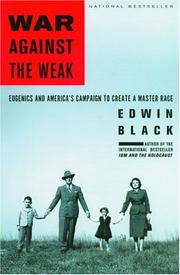 War Against the Weak: Eugenics and America's Campaign to Create a Master Race Shares nonfiction, eugenics, non
 -
 Ideas Have Consequences Shares philosophy, politics, nonfiction
 -
 Free onlineFree
Considerations On Representative Government Shares non, philosophy, politics
Free onlineFree
Considerations On Representative Government Shares non, philosophy, politics -
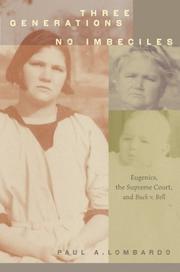 Three Generations, No Imbeciles: Eugenics, the Supreme Court, and Buck v. Bell Shares eugenics, nonfiction, science
“People who read Eugenics and Other Evils: An Argument Against the Scientifically Organized State tend to reach for these next.”


“If you want more of the same (philosophy about christian), start with these.”

“If it was the non that hooked you, try one of these.”

“These start from a similar idea, even if they go somewhere else with it.”
-
 Imbeciles: The Supreme Court, American Eugenics, and the Sterilization of Carrie Buck
-
 Eugenic Nation: Faults and Frontiers of Better Breeding in Modern America
-
 Better for All the World: The Secret History of Forced Sterilization and America's Quest for Racial Purity
-
 The Myth of Race: The Troubling Persistence of an Unscientific Idea