The Writer's Chapbook A Compendium of Fact, Opinion, Wit, and Advice from the Twentieth Century's Preeminent Writers
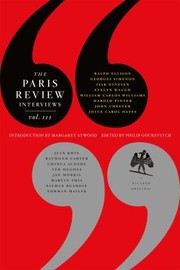
Writers At Work: The Paris Review Interviews series
Sign in to keep track of books you’ve read and want to read.
The first issue of The Paris Review in 1953 included an interview on the craft of writing with E. M. Forster, perhaps the greatest living author of the time. Subsequent issues carried interviews with, among others, Francois Mauriac, Graham Greene, Irwin Shaw, William Styron, Ralph Ellison, and William Faulkner; in the intervening years, many of the world's most significant writers (Ezra Pound, Robert Frost, Ernest Hemingway, John Updike, and John Dos Passos) sat down with The Paris Review. Many of the interviews have been collected in a series of volumes entitled Writers at Work. From these interviews, The Paris Review's editor, George Plimpton, has selected the best and most illuminating insights that the writers have provided and arranged them by subject rather than by author. The book is divided into four parts: "The Writer: A Profile" (including the sections "On Reading," "On Work Habits," On the Audi-
Read more
ence," etc.); Part II is "Technical Matters" ("On Style," "On Plot," etc.); Part III is "Different Forms" ("On Biography," "On Journalism"); and Part IV is "The Writer's Life," covering topics like conferences, courses, and teaching, along with a section in which writers provided portraits of other writers.
The Writer's Chapbook is a fund of observations by writers on writing. These range from marvel-
ous one-liners (Eugene O'Neill on critics: "I love every bone in their heads"; T. S. Eliot on editors: "I suppose some editors are failed writers—but so are most writers") to expositions on plot, character, and the technical process of putting pen to paper and doing it for a living. "I don't even have a plot," says Norman Mailer; Paul Bowles describes writing in bed; Toni Morrison talks about inventing characters; and Edward Albee and Tom Wolfe explain where they discovered the titles for Who's Afraid of Virginia Woolf and The Bonfire of the Vanities.
This book is a treasure. But beware: What is true for the Writers at Work series holds for The Writer's Chapbook even more—a reader who picks it up, intending just to dip into it, might not emerge for days.
Liked The Writer's Chapbook A Compendium of Fact, Opinion, Wit, and Advice from the Twentieth Century's Preeminent Writers? Here’s where I’d start.
These suit anyone who liked The Writer's Chapbook A Compendium of Fact, Opinion, Wit, and Advice from the Twentieth Century's Preeminent Writers. Sign in and mark a few books for picks shaped around your own taste.
-
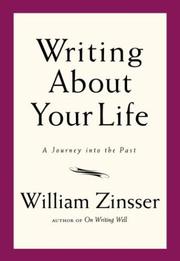 Writing About Your Life: A Journey into the Past Shares writing, on writing, nonfiction
 -
 The Kite and the String: How to Write with Spontaneity and Control--and Live to Tell the Tale Shares writing, nonfiction, on writing
 -
Naming the World: And Other Exercises for the Creative Writer Shares writing, on writing, nonfiction
-
A Writer's Guide to Persistence: How to Create a Lasting and Productive Writing Practice Shares writing, nonfiction, on writing