
Everything for Sale: The Virtues and Limits of Markets
Sign in to keep track of books you’ve read and want to read.
In this highly acclaimed, provocative book, Robert Kuttner disputes the laissez-faire direction of both economic theory and practice that has been gaining in prominence since the mid-1970s. Dissenting voices, Kuttner argues, have been drowned out by a stream of circular arguments and complex mathematical models that ignore real-world conditions and disregard values that can't easily be turned into commodities. With its brilliant explanation of how some sectors of the economy require a blend of market, regulation, and social outlay, and a new preface addressing the current global economic crisis, Kuttner's study will play an important role in policy-making for the twenty-first century.
"The best survey of the limits of free markets that we have. . . . A much needed plea for pragmatism: Take from free markets what is good and do not hesitate to recognize what is bad."—Jeff Madrick, Los Angeles Times
Read more
"It ought to be compulsory reading for all politicians—fortunately for them and us, it is an elegant read."—The Economist
"Demonstrating an impressive mastery of a vast range of material, Mr. Kuttner lays out the case for the market's insufficiency in field after field: employment, medicine, banking, securities, telecommunications, electric power."—Nicholas Lemann, New York Times Book Review
"A powerful empirical broadside. One by one, he lays on cases where governments have outdone markets, or at least performed well."—Michael Hirsh, Newsweek
"To understand the economic policy debates that will take place in the next few years, you can't do better than to read this book."—Suzanne Garment, Washington Post Book World
Liked Everything for Sale: The Virtues and Limits of Markets? Here’s where I’d start.
These suit anyone who liked Everything for Sale: The Virtues and Limits of Markets. Sign in and mark a few books for picks shaped around your own taste.
-
Owning Our Future: The Emerging Ownership Revolution Shares economics, nonfiction, business
-
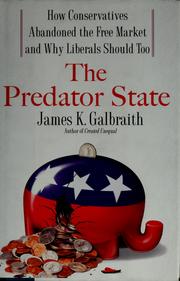 The Predator State: How Conservatives Abandoned the Free Market and Why Liberals Should Too Shares economics, nonfiction, politics
 -
 The New Industrial State Shares economics, nonfiction, politics
 -
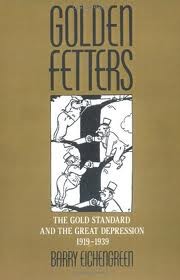 Golden Fetters: The Gold Standard and the Great Depression, 1919-1939 Shares economics, nonfiction
“People who read Everything for Sale: The Virtues and Limits of Markets tend to reach for these next.”
-
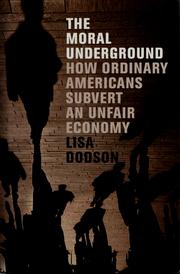 The Moral Underground: How Ordinary Americans Subvert an Unfair Economy
-
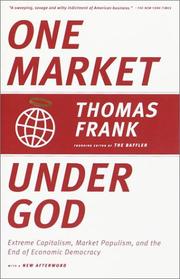 One Market Under God: Extreme Capitalism, Market Populism, and the End of Economic Democracy
-
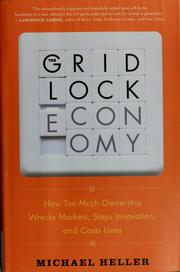 The Gridlock Economy: How Too Much Ownership Wrecks Markets, Stops Innovation, and Costs Lives
-
 False Dawn: The Delusions of Global Capitalism
“If you want more of the same (economics about politics), start with these.”


“If it was the business that hooked you, try one of these.”



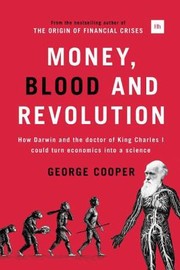
“These start from a similar idea, even if they go somewhere else with it.”
-
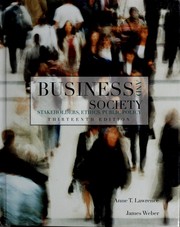 Business and Society: Stakeholders, Ethics, Public Policy
-
 Toward a Truly Free Market: A Distributist Perspective on the Role of Government, Taxes, Health Care, Deficits, and More
-
 The Only Game in Town: Central Banks, Instability, and Avoiding the Next Collapse
-
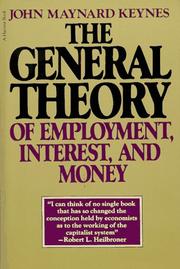 The General Theory of Employment, Interest, and Money