The Geography of Thought: How Asians and Westerners Think Differently... and Why
Sign in to keep track of books you’ve read and want to read.
A "landmark book" (Robert J. Sternberg, president of the American Psychological Association) by one of the world's preeminent psychologists that proves human behavior is not "hard-wired" but a function of culture.
Read more
Everyone knows that while different cultures think about the world differently, they use the same equipment for doing their thinking. But what if everyone is wrong?
The Geography of Thoughtdocuments Richard Nisbett's groundbreaking international research in cultural psychology and shows that people actually think about—and even see—the world differently because of differing ecologies, social structures, philosophies, and educational systems that date back to ancient Greece and China. As a result, East Asian thought is "holistic"—drawn to the perceptual field as a whole and to relations among objects and events within that field. By contrast, Westerners focus on salient objects or people, use attributes to assign them to categories, and apply rules of formal logic to understand their behavior.
From feng shui to metaphysics, from comparative linguistics to economic history, a gulf separates the children of Aristotle from the descendants of Confucius. At a moment in history when the need for cross-cultural understanding and collaboration have never been more important, The Geography of Thoughtoffers both a map to that gulf and a blueprint for a bridge that will span it.
Liked The Geography of Thought: How Asians and Westerners Think Differently... and Why? Here’s where I’d start.
These suit anyone who liked The Geography of Thought: How Asians and Westerners Think Differently... and Why. Sign in and mark a few books for picks shaped around your own taste.
-
 The Sibling Society Shares psychology, nonfiction, philosophy
 -
 Admirable Evasions: How Psychology Undermines Morality Shares psychology, nonfiction, philosophy
 -
 Us and Them: Understanding Your Tribal Mind Shares psychology, nonfiction, sociology
 -
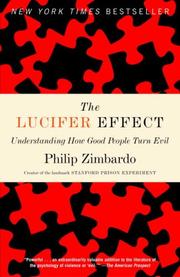 The Lucifer Effect: Understanding How Good People Turn Evil Shares psychology, nonfiction, sociology