Maslow on Management
Sign in to keep track of books you’ve read and want to read.
"Proper management of the work lives of human beings, of the way in which they earn their living, can improve them and improve the world and in this sense be a utopian or revolutionary technique." The pioneer behind the hierarchy of needs and the concept of self-actualization, Dr. Abraham Maslow was-and is-one of the world's most esteemed experts on human behavior and motivation. However, while perhaps most famous for his work in the area of humanistic psychology, his legacy of work encompasses much more, extending into the realms of business and management. Having explored and studied the relationship between human behavior and the work situation, Maslow translated the science of the mind into the art of management-an important interpretation first published in the far-sighted treatise, Eupsychian Management, and whose impact continues to be felt today. Now, this seminal work has been updated, primed to introduce new readers to-and reacquaint old admirers with-what some have called the renowned psychologist's best book. Bringing into perspective the lasting impact of Maslow's groundbreaking principles, Maslow on Management illustrates how they have withstood the test of time to become integral components of current management practices, such as continuous improvement, Theory X, and empowerment. Offering insight into using these and other tools to effectively tackle present-day business situations, from heightened competitiveness to globalization to emerging technologies, Maslow on Management covers a wealth of timeless topics, including:* Self-actualization-the freedom to effectuate one's own ideas, try things out, make decisions, and make mistakes
Read more
* Synergy-what is beneficial for the individual is beneficial for everyone; individual success should not occur at the expense of others; align organizational goals with personal goals
* Enlightened management policy-assume that all your people have the impulse to achieve; everyone prefers to be a prime mover rather than a passive helper; everyone wants to feel important, needed, useful, successful, and proud; there is no dominance-subordination hierarchy
To complement Dr. Maslow's original writings and to demonstrate how his forward-thinking ideas are being played out in today's business world, Maslow on Management features interviews with Perot Systems Chairman Mort Meyerson, NonLinear Systems founder Andrew Kay, Esalen Institute founder Michael Murphy, and other prominent figures who provide incisive commentary on subjects ranging from creativity in business to leadership lessons for the digital age. Epitomizing the genius of its author and embodying his elegant ruminations, Maslow on Management is still as important as it was when it first appeared. A true classic, this is essential reading for all managers.
Liked Maslow on Management? Here’s where I’d start.
These suit anyone who liked Maslow on Management. Sign in and mark a few books for picks shaped around your own taste.
-
 Hiring Smart!: How to Predict Winners and Losers in the Incredibly Expensive People-Reading Game Shares management, business, psychology
 -
 A Simpler Way Shares leadership, business, nonfiction
 -
 Emotional Capitalists: The New Leaders (J-B Foreign Imprint Series - Emea) Shares management, psychology, business
 -
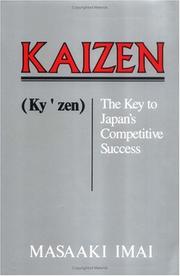 Kaizen: The Key to Japan's Competitive Success Shares business, management, nonfiction
“People who read Maslow on Management tend to reach for these next.”


“If you want more of the same (business about work), start with these.”




“If it was the management that hooked you, try one of these.”
-
 Office Politics: How to Thrive in a World of Lying, Backstabbing and Dirty Tricks
-
 Up the Organization: How to Stop the Corporation from Stifling People and Strangling Profits
- HBR's 10 Must Reads 2015: The Definitive Management Ideas of the Year from Harvard Business Review (with bonus McKinsey Award–Winning article "The Focused Leader") (HBR’s 10 Must Reads)
-
 Classic Drucker: Essential Wisdom of Peter Drucker from the Pages of Harvard Business Review