Just Anger: Representing Women's Anger in Early Modern England
Sign in to keep track of books you’ve read and want to read.
"Recognizing that ideas about emotions vary historically as well as culturally, Kennedy draws from recent critical work on emotions by historians, literary scholars, philosophers, and psychologists, as well as comparative studies of the emotions by cultural anthropologists. She contends that ideas about women's anger in early modern England are both like and unlike those in twentieth-century America.
Read more
Although women's anger is often dismissed as irrational in both eras, for instance, in the early modern era women were thought to become angry more often and more easily than men due to their inherent physiological, intellectual, and moral inferiority.".
"Kennedy demonstrates the importance of class and race as factors affecting anger's legitimacy and its forms of expression. She shows how early modern assumptions about women's anger can help to create or exaggerate other differences among women. Her close scrutiny of anger against female inferiority emphasizes the crucial role of emotions in the construction of self-worth and identity."—BOOK JACKET.
Liked Just Anger: Representing Women's Anger in Early Modern England? Here’s where I’d start.
These suit anyone who liked Just Anger: Representing Women's Anger in Early Modern England. Sign in and mark a few books for picks shaped around your own taste.
-
 The legacy of Boadicea Shares welsh, scottish, women and literature
-
 Victorian women's fiction Shares welsh, scottish, women and literature
-
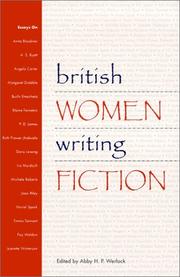 British women writing fiction Shares welsh, scottish, women and literature
-
Women writers and nineteenth-century medievalism Shares welsh, scottish, women and literature