Jacquard's Web: How a Hand-Loom Led to the Birth of the Information Age
Sign in to keep track of books you’ve read and want to read.
In Jacquard's Web, James Essinger tells the story of some of the most brilliant inventors the world has ever known, in this fascinating account of how a hand-loom invented in Napoleonic France led to the development of the modern information age.
Read more
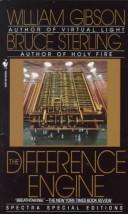
Essinger, a master story-teller, describes how Joseph-Marie Jacquard's loom enabled the silk-weavers of Lyons to weave fabrics 25 times faster than had previously been possible. The device used punched cards, which stored instructions for weaving whatever pattern or design was required. These cards can very reasonably be described as the world's first computer programs. Indeed, Essinger shows through a series of remarkable and meticulously researched historical connections—connections never before investigated—that the Jacquard loom kick-started a process of scientific evolution which would lead directly to the development of the modern computer. The book examines a wealth of extraordinary links between the nineteenth-century world of weaving and today's computer age: for example, modern computer graphics displays are based on exactly the same principles as those employed in Jacquard's special woven tableaux. Jacquard's Webalso introduces some of the most colorful and interesting characters in the history of science and technology: the modest but exceptionally dedicated Jacquard himself; the brilliant but temperamental Victorian polymath Charles Babbage, who dreamed of a cogwheel computer operated using Jacquard cards; and the imaginative and perceptive Ada Lovelace, Lord Byron's only legitimate daughter.
Attractively illustrated and compellingly narrated, Jacquard's Webis an engaging and delightful volume. It is an impressive case of historical detective work, one that will leave the reader mesmerized.
Liked Jacquard's Web: How a Hand-Loom Led to the Birth of the Information Age? Here’s where I’d start.
These suit anyone who liked Jacquard's Web: How a Hand-Loom Led to the Birth of the Information Age. Sign in and mark a few books for picks shaped around your own taste.
-
 The Dream Machine: J.C.R. Licklider and the Revolution That Made Computing Personal Shares history, nonfiction, computing
 -
 Electronic Dreams: How 1980s Britain Learned to Love the Computer Shares history, computing, nonfiction
 -
 The Victorian Internet Shares history, nonfiction, science
 -
 Machines as the Measure of Men: Science, Technology and Ideologies of Western Dominance Shares history, history of science, science and technology