The Lifebox, the Seashell, and the Soul: What Gnarly Computation Taught Me About Ultimate Reality, the Meaning of Life, and How to Be Happy
Sign in to keep track of books you’ve read and want to read.
A journey of a thousand miles begins with one step, goes the ancient saying. This concept is at the root of the computational worldview, which basically says that very complex systems — the world we live in — have their beginnings in simple mathematical equations. We've lately come to understand that such an algorithm is only the start of a never-ending story — the real action occurs in the unfolding consequences of the rules. The chip-in-a-box computers so popular in our time have acted as a kind of microscope, letting us see into the secret machinery of the world. In Lifebox, Rucker uses whimsical drawings, fables, and humor to demonstrate that everything is a computation — that thoughts, computations, and physical processes are all the same. Rucker discusses the linguistic and computational advances that make this kind of "digital philosophy" possible, and explains how, like every great new principle, the computational world view contains the seeds of a next step.
Liked The Lifebox, the Seashell, and the Soul: What Gnarly Computation Taught Me About Ultimate Reality, the Meaning of Life, and How to Be Happy? Here’s where I’d start.
These suit anyone who liked The Lifebox, the Seashell, and the Soul: What Gnarly Computation Taught Me About Ultimate Reality, the Meaning of Life, and How to Be Happy. Sign in and mark a few books for picks shaped around your own taste.
-
 The Outer Limits of Reason: What Science, Mathematics, and Logic Cannot Tell Us Shares science, philosophy, nonfiction
 -
 Metamagical Themas: Questing for the Essence of Mind and Pattern Shares science, philosophy, nonfiction
 -
The New Ambidextrous Universe Shares science, nonfiction, math
-
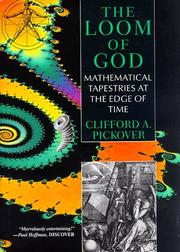 The Loom Of God Shares science, nonfiction, math