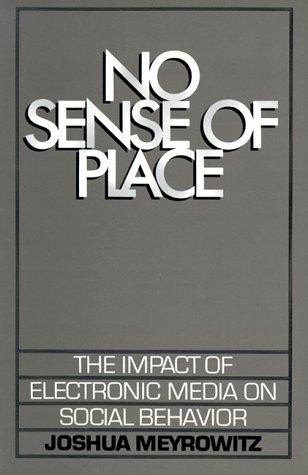
No Sense of Place: The Impact of Electronic Media on Social Behavior
Sign in to keep track of books you’ve read and want to read.
How have changes in media affected our everyday experience, behavior, and sense of identity? Such questions have generated endless arguments and speculations, but no thinker has addressed the issue with such force and originality as Joshua Meyrowitz in No Sense of Place. Advancing a daring and sophisticated theory, Meyrowitz shows how television and other electronic media have created new social situations that are no longer shaped by where we are or who is "with" us.
Read more
While other media experts have limited the debate to message content, Meyrowitz focuses on the ways in which changes in media rearrange "who knows what about whom" and "who knows what compared to whom," making it impossible for us to behave with each other in traditional ways. No Sense of Placeexplains how the electronic landscape has encouraged the development of:
-More adultlike children and more childlike adults;
-More career-oriented women and more family-oriented men; and
-Leaders who try to act more like the "person next door" and real neighbors who want to have a greater say in local, national, and international affairs.
The dramatic changes fostered by electronic media, notes Meyrowitz, are neither entirely good nor entirely bad. In some ways, we are returning to older, pre-literate forms of social behavior, becoming "hunters and gatherers of an information age." In other ways, we are rushing forward into a new social world. New media have helped to liberate many people from restrictive, place-defined roles, but the resulting heightened expectations have also led to new social tensions and frustrations. Once taken-for-granted behaviors are now subject to constant debate and negotiation.
The book richly explicates the quadruple pun in its title: Changes in media transform how we sense information and how we make sense of our physical and social places in the world.
Liked No Sense of Place: The Impact of Electronic Media on Social Behavior? Here’s where I’d start.
These suit anyone who liked No Sense of Place: The Impact of Electronic Media on Social Behavior. Sign in and mark a few books for picks shaped around your own taste.
-
 The Bias of Communication Shares media ecology, media, nonfiction
 -
 Mediated: How the Media Shapes Your World and the Way You Live in It Shares media, nonfiction, sociology
 -
 Technopoly: The Surrender of Culture to Technology Shares nonfiction, sociology, technology
 -
 Life on the Screen Shares nonfiction, psychology, media
“People who read No Sense of Place: The Impact of Electronic Media on Social Behavior tend to reach for these next.”




“If you want more of the same (psychology about technology), start with these.”
-
 Convergence Culture: Where Old and New Media Collide
-
 The Media Equation: How People Treat Computers, Television, and New Media Like Real People and Places
-
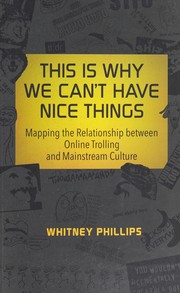 This Is Why We Can't Have Nice Things: Mapping the Relationship Between Online Trolling and Mainstream Culture
-
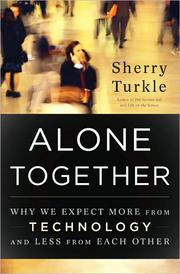 Alone Together: Why We Expect More from Technology and Less from Each Other