From Being to Becoming: Time and Complexity in the Physical Sciences
Sign in to keep track of books you’ve read and want to read.
Ilya Prigogine takes up a question that much of physics had long set aside: why does time seem to run in only one direction? The fundamental laws of motion treat past and future alike, yet in everyday experience processes are irreversible. Heat spreads, materials age, and living systems grow more complex. This book traces how the physical sciences have tried to reconcile these facts, moving from the classical thinkers of thermodynamics to the study of systems far from equilibrium. Prigogine argues that time is not an illusion to be removed from our picture of nature but part of its basic structure, and that order can arise out of disorder. Written for readers with some scientific background, the book also considers the philosophical consequences of this change in outlook.
Liked From Being to Becoming: Time and Complexity in the Physical Sciences? Here’s where I’d start.
These suit anyone who liked From Being to Becoming: Time and Complexity in the Physical Sciences. Sign in and mark a few books for picks shaped around your own taste.
-
 The Quark and the Jaguar: Adventures in the Simple and the Complex Shares science, physics, complexity
-
 The Ghost in the Atom: A Discussion of the Mysteries of Quantum Physics Shares science, physics, philosophy of science
-
 Other Worlds: Space, Superspace, and the Quantum Universe Shares science, physics, philosophy of science
-
 The Cosmic Machine: The Science That Runs Our Universe and the Story Behind It Shares science, physics, nonfiction
“If you want more of the same (science), start with these.”

“If it was the physics that hooked you, try one of these.”
-
 Farewell to Reality: How Modern Physics Has Betrayed the Search for Scientific Truth
-
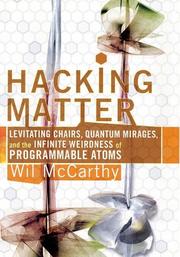 Hacking Matter: Levitating Chairs, Quantum Mirages, And The Infinite Weirdness Of Programmable Atoms
-
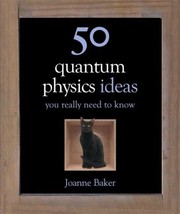 50 Quantum Physics Ideas You Really Need to Know (50 Ideas You Really Need to Know series)
-
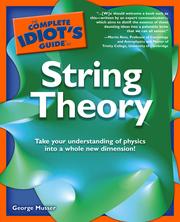 The Complete Idiot's Guide to String Theory