Cover of Mathematical Methods for Physicists

Mathematical Methods for Physicists

Provides the essential mathematical tools and techniques used to solve problems in physics. This work includes differential forms and the elegant forms of Maxwell's equations, and a chapter on probability and statistics. It also illustrates and proves mathematical relations.

Audience
adult
Length
epic · 1182 pages

Click a tag to see books like this one that share it. Point at it (on a phone, tap it) for less of it instead.

Read it? Sign in to help tag it.

Liked Mathematical Methods for Physicists? Here’s where I’d start.

These suit anyone who liked Mathematical Methods for Physicists. Sign in and mark a few books for picks shaped around your own taste.


  1. Introduction to Quantum Mechanics Shares physics, science, textbooks
  2. Classical Electrodynamics Shares physics, science, textbooks
  3. Introduction to Solid State Physics Shares physics, science, textbooks
  4. Mathematical Methods in the Physical Sciences Shares physics, math, mathematics

“People who read Mathematical Methods for Physicists tend to reach for these next.”

  1. An Introduction to Mechanics
  2. An Introduction to Modern Astrophysics
  3. Modern Quantum Mechanics
  4. Spacetime and Geometry: An Introduction to General Relativity

“If you want more of the same (science), start with these.”

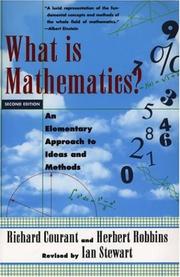
  1. What Is Mathematics?: An Elementary Approach to Ideas and Methods
  2. Archimedes' Revenge: The Joys and Perils of Mathematics
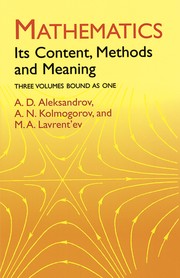
  3. Mathematics: Its Content, Methods and Meaning
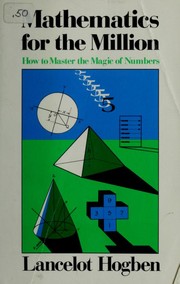
  4. Mathematics for the Million: How to Master the Magic of Numbers

“If it was the physics that hooked you, try one of these.”

  1. Emmy Noether's Wonderful Theorem
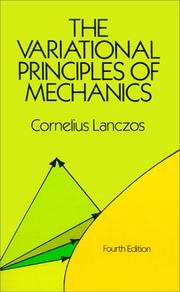
  2. The Variational Principles of Mechanics
  3. Mathematics of Classical and Quantum Physics
  4. A Student's Guide to Maxwell's Equations

“These start from a similar idea, even if they go somewhere else with it.”

  1. Partial Differential Equations for Scientists and Engineers
  2. Probability and statistics
  3. Fundamental Methods of Mathematical Economics
  4. New Mathematical Diversions (Spectrum Series)