Essays in Idleness - The Tsurezuregusa of Kenko
Sign in to keep track of books you’ve read and want to read.
Written sometime between 1330 and 1332, the Essays in Idleness,with their timeless relevance and charm, hardly mirror the turbulent time in which they were born. Depite the struggle between the Emperor Go-Daigo and the usurping Hojo family that rocked Japan during these years, the Buddhist priest Yoshida Kenko found himself 'with nothing better to do, jotting down at random whatever nonsensical thoughts have entered my head'. The resulting essays, none of them more than a few pages in length and some consisting of but two or three sentence, treat a great variety of subjects in a congenial, anecdotal style. Kenko clung to tradition, Buddhism, and the pleasures of solitude, and the themes he treats are all suffused with an unspoken acceptance of Buddhist beliefs. Above all, Kenko gives voice to a distinctly Japanese aesthetic principle - that beauty is bound to perishability.
Liked Essays in Idleness - The Tsurezuregusa of Kenko? Here’s where I’d start.
These suit anyone who liked Essays in Idleness - The Tsurezuregusa of Kenko. Sign in and mark a few books for picks shaped around your own taste.
-
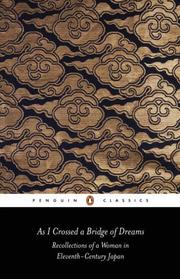 As I Crossed a Bridge of Dreams: Recollections of a Woman in Eleventh-Century Japan Shares Japan, japanese, japanese literature
 -
 Hojoki: Visions of a Torn World Shares Japan, japanese, japanese literature
 -
 The Pillow Book Shares Japan, japanese, nonfiction
 -
 My Individualism & The Philosophical Foundations of Literature Shares Japan, japanese, essays