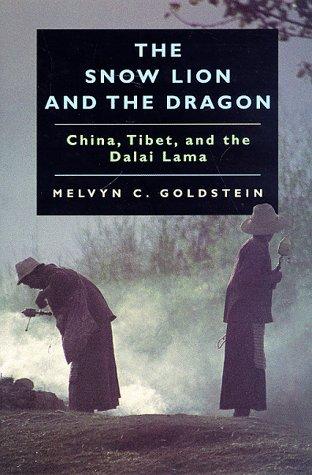
The Snow Lion and the Dragon: China, Tibet, and the Dalai Lama
Sign in to keep track of books you’ve read and want to read.
Tensions over the "Tibet Question"—the political status of Tibet—are escalating every day. The Dalai Lama has gained broad international sympathy in his appeals for autonomy from China, yet the Chinese government maintains a hard-line position against it. What is the history of the conflict? Can the two sides come to an acceptable compromise? In this thoughtful analysis, distinguished professor and longtime Tibet analyst Melvyn C. Goldstein presents a balanced and accessible view of the conflict and a proposal for the future.
Read more
Tibet's political fortunes have undergone numerous vicissitudes since the fifth Dalai Lama first ascended to political power in Tibet in 1642. In this century, a forty-year period of de facto independence following the fall of the Qing dynasty in 1911 ended abruptly when the Chinese Communists forcibly incorporated Tibet into their new state and began the series of changes that destroyed much of Tibet's traditional social, cultural, and economic system. After the death of Mao in 1976, the rise to power of Deng Xiaoping quickly produced a change in attitude in Beijing and a major initiative to negotiate with the Dalai Lama to solve the conflict. This failed. With the death of Deng Xiaoping, the future of Tibet is more uncertain than ever, and Goldstein argues that the conflict could easily erupt into violence.
Drawing upon his deep knowledge of the Tibetan culture and people, Goldstein takes us through the history of Tibet, concentrating on the political and cultural negotiations over the status of Tibet from the turn of the century to the present. He describes the role of Tibet in Chinese politics, the feeble and conflicting responses of foreign governments, overtures and rebuffs on both sides, and the nationalistic emotions that are inextricably entwined in the political debate. Ultimately, he presents a plan for a reasoned compromise, identifying key aspects of the conflict and appealing to the United States to play an active diplomatic role. Clearly written and carefully argued, this book will become the definitive source for anyone seeking an understanding of the Tibet Question during this dangerous turning point in its turbulent history.
Liked The Snow Lion and the Dragon: China, Tibet, and the Dalai Lama? Here’s where I’d start.
These suit anyone who liked The Snow Lion and the Dragon: China, Tibet, and the Dalai Lama. Sign in and mark a few books for picks shaped around your own taste.
-
 The Dragon in the Land of Snows: A History of Modern Tibet Since 1947 Shares Tibet, China, history
 -
 A Year in Tibet: A Voyage of Discovery Shares China, Tibet, nonfiction
 -
 Streets of Hope: The Fall and Rise of an Urban Neighborhood Shares nonfiction, history, politics
 -
 Understanding China: A Guide to China's Economy, History, and Political Culture Shares China, history, nonfiction
“People who read The Snow Lion and the Dragon: China, Tibet, and the Dalai Lama tend to reach for these next.”

“If you want more of the same (history about buddhism), start with these.”


“If it was the China that hooked you, try one of these.”
-
 In Exile from the Land of Snows: The Definitive Account of the Dalai Lama and Tibet Since the Chinese Conquest
-
 The Unbearable Dreamworld of Champa the Driver
-
 The Dragon and the Foreign Devils: China and the World, 1100 B.C. to the Present
-
 Sons of the Yellow Emperor: A History of the Chinese Diaspora