Cover of Mass Transfer Operations

Mass Transfer Operations

This textbook sets out to teach the methods and equipment design behind mass-transfer operations, the processes that separate substances and form a central part of chemical engineering. It is meant for a classroom course or for a reader working alone. Although chemical engineers have long been responsible for these techniques, engineers from other fields now need them too, particularly in pollution control and environmental protection, where separation processes dominate. The methods are also increasingly used in extractive metallurgy, where more advanced and varied ways of separating materials are needed.

Audience
adult

Click a tag to see books like this one that share it. Point at it (on a phone, tap it) for less of it instead.

Read it? Sign in to help tag it.

Liked Mass Transfer Operations? Here’s where I’d start.

These suit anyone who liked Mass Transfer Operations. Sign in and mark a few books for picks shaped around your own taste.

  1. Chemical Reaction Engineering Shares chemical engineering
  2. Elements of Chemical Reaction Engineering Shares chemical engineering
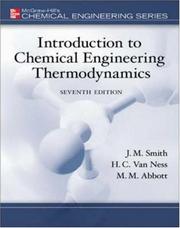
  3. Introduction to Chemical Engineering Thermodynamics Shares chemical engineering
  4. Perry's Chemical Engineers' Handbook Shares chemical engineering

“People who read Mass Transfer Operations tend to reach for these next.”

  1. Heat Transfer
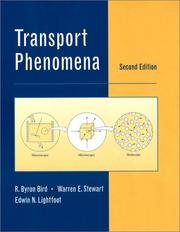
  2. Transport Phenomena
  3. Weather for Dummies
  4. Bioseparations: Downstream Processing for Biotechnology

“If you want more of the same (science), start with these.”

  1. Math word problems
  2. CliffsQuickReview trigonometry
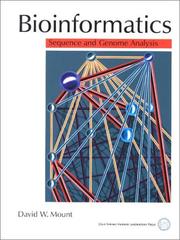
  3. Bioinformatics: Sequence and Genome Analysis (1st Edition)
  4. Epidemiology in Medicine

“If it was the mass that hooked you, try one of these.”

  1. Unit Operations of Chemical Engineering
  2. Bunker Hill
  3. A Century of Subways: Celebrating 100 Years of New York's Underground Railways
  4. Down the Tube: The Battle for London's Underground

“These start from a similar idea, even if they go somewhere else with it.”

  1. Chemical engineering
  2. Solutions manual to accompany Applied mathematics and modeling for chemical engineers
  3. Discussion of the Method: Conducting the Engineer's Approach to Problem Solving
  4. Artificial intelligence methods in the environmental sciences