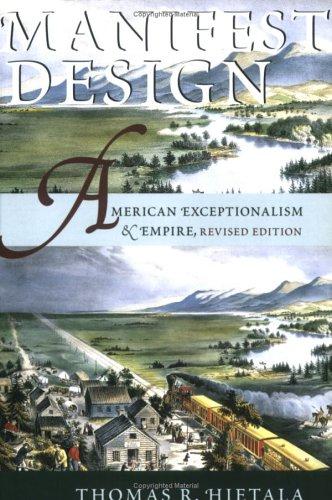
Manifest Design: American Exceptionalism and Empire
Sign in to keep track of books you’ve read and want to read.
Praise for the earlier edition—
"A fascinating, thought-provoking book. . . . Hietala shows that it was not destiny but design and aggression that enabled the United States to control Texas, New Mexico, and California."—Historian
Read more
"Hietala has examined an impressive array of primary and secondary materials. . . . His handling of the relationship between the domestic and foreign policies of the decade shatters some myths about America's so-called manifest destiny and deserves the attention of all scholars and serious students of the period."—Western Historical Quarterly
Since 1845, the phrase "manifest destiny" has offered a simple and appealing explanation of the dramatic expansionism of the United States. In this incisive book, Thomas R. Hietala reassesses the complex factors behind American policymaking during the late Jacksonian era. Hietala argues that the quest for territorial and commercial gains was based more on a desire for increased national stability than on any response to demands by individual pioneers or threats from abroad.
Liked Manifest Design: American Exceptionalism and Empire? Here’s where I’d start.
These suit anyone who liked Manifest Design: American Exceptionalism and Empire. Sign in and mark a few books for picks shaped around your own taste.
-
 A Century Turns: New Hopes, New Fears Shares American history, history, nonfiction
 -
 The Short American Century: A Postmortem Shares American history, history, politics
 -
 The Age of Anxiety: McCarthyism to Terrorism Shares American history, history, nonfiction
 -
 The Jefferson Rule: How the Founding Fathers Became Infallible and Our Politics Inflexible Shares American history, history, nonfiction