
The State Boys Rebellion
Sign in to keep track of books you’ve read and want to read.
At age seven, an orphan boy named Freddie Boyce finally believed he had found a real home with a kindly widow who raised foster children on her farm in rural Massachusetts. But when his foster mother died in the winter of 1949, Freddie was subjected to a rudimentary IQ test and then sent to a state institution for the feebleminded. There, along with other relatively normal State Boys, he would endure neglect, abuse, and terror and live without the hope of ever being free again.Though they couldn't possible know it, the children of the Fernald State School were the victims of bad science and a newly developed bureaucracy designed to save America from the so-called "menace of the feebleminded." Beginning early in the twentieth century, United States health officials used crude versions of the modern IQ tests to identify supposedly "deficient" children and lock them away. The idea was to protect society from potential criminals and to prevent so-called "undesirables" from having children and degrading the American gene pool.
Read more
Under programs that existed in almost every state and continued into the 1970s, more than 250,000 children were separated from their families. Tens of thousands of these were not disabled but merely unwanted orphans, truants, or delinquents. Yet they were denied proper education, routinely abused, and could be subjected to forced surgical sterilization, lobotomy, shock therapy, and psychotropic drugs.
"The State Boys Rebellion" is the dramatic and meticulously researched true story of Fred Boyce and a group of boys who never accepted their incarceration at the Fernald State School in Massachusetts and insisted they were normal. In many cases, schoolofficials noted that they were not disabled and did not belong in an institution. But the school depended on their unpaid labor, and so they were kept locked away in wards where many were beaten, raped, forced to fight each other. They were offered no hope for freedom and knew that others had grown old and died within Fernald's walls.
Inspired by what they learned from television and radio about the national civil rights movement, the State Boys protested their mistreatment, pleaded in vain for their freedom, and rebelled by running away. Finally, in a desperate attempt to get attention for their plight, they seized control of a prisonlike ward and demanded their rights. Although the participants in this dramatic event were imprisoned for their actions, the takeover eventually led to freedom for many State Boys, who were given minimal training and then released to fend for themselves.
In these pages, the reader will learn how the State Boys struggle to survive without family, social connections, or education. Some never adjust and die of alcohol and drug abuse. Others manage to build stable lives, with good jobs, family, and friends. While they try to forget the past, it all comes rushing back in the 1990s when news reports announce that they had been used as human guinea pigs in Cold War experiments in which they were fed radioactive oatmeal. Under Fred Boyce's leadership, the State Boys reunite, sue, and win a multimillion-dollar settlement.
To capture this story, award-winning journalist Michael D'Antonio worked closely with the surviving State Boys, interviewed former Fernald teachers and professionals, used the archives of the school, and won the release of previously sealedpapers. The result is a thoroughly documented story from an almost-forgotten corner of American history. It reveals the danger in misguided science, the fearsome power of unchecked bureaucracies, and the remarkable resilience of the human spirit.
Liked The State Boys Rebellion? Here’s where I’d start.
These suit anyone who liked The State Boys Rebellion. Sign in and mark a few books for picks shaped around your own taste.
-
 13: The Story of the World's Most Notorious Superstition Shares nonfiction, history, psychology
 -
 On Her Own Ground: The Life and Times of Madam C.J. Walker Shares nonfiction, history, American history
 -
 Better for All the World: The Secret History of Forced Sterilization and America's Quest for Racial Purity Shares nonfiction, history, eugenics
 -
 The Great Starvation Experiment: The Heroic Men Who Starved so That Millions Could Live Shares nonfiction, history, American history
“People who read The State Boys Rebellion tend to reach for these next.”
-
 War Against the Weak: Eugenics and America's Campaign to Create a Master Race
-
 Orphan Trains: The Story of Charles Loring Brace and the Children He Saved and Failed
-
 A Brief History of the Future: The Origins of the Internet
-
 Critical Condition: How Health Care in America Became Big Business--and Bad Medicine
“If you want more of the same (history about american history), start with these.”
-
 Lone Voyager: The Extraordinary Adventures Of Howard Blackburn Hero Fisherman Of Gloucester
-
 A Little Commonwealth: Family Life in Plymouth Colony
-
 The Last Fish Tale: The Fate of the Atlantic & Survival in Gloucester, America's Oldest Fishing Port & Most Original Town
-
 Mayflower: A Story of Courage, Community, and War
“Readers describe these the same way.”

“These start from a similar idea, even if they go somewhere else with it.”
-
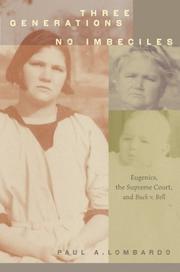 Three Generations, No Imbeciles: Eugenics, the Supreme Court, and Buck v. Bell
-
 Against Their Will: The Secret History of Medical Experimentation on Children in Cold War America
-
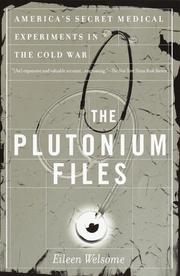 The Plutonium Files: America's Secret Medical Experiments in the Cold War
-
 The Minds of Boys: Saving Our Sons from Falling Behind in School and Life