Supreme Command: Soldiers, Statesmen, and Leadership in Wartime
Sign in to keep track of books you’ve read and want to read.
The orthodoxy regarding the relationship between politicians and military leaders in wartime democracies contends that politicians should declare a military operation's objectives and then step aside and leave the business of war to the military. In this timely and controversial examination of civilian-military relations in wartime democracies, Eliot A. Cohen chips away at this time-honored belief with case studies of statesmen who dared to prod, provoke, and even defy their military officers to great effect.
Read more
Using the leadership of Abraham Lincoln, Georges Clemenceau, Winston Churchill, and David Ben-Gurion to build his argument, Cohen offers compelling proof that, as Clemenceau put it, "War is too important to leave to the generals." By examining the shared leadership traits of four politicians who triumphed in extraordinarily varied military campaigns, Cohen argues that active statesmen make the best wartime leaders, pushing their military subordinates to succeed where they might have failed if left to their own devices. Thought provoking and soundly argued, Cohen's Supreme Commandis essential reading not only for military and political players but also for informed citizens and anyone interested in leadership.
Liked Supreme Command: Soldiers, Statesmen, and Leadership in Wartime? Here’s where I’d start.
These suit anyone who liked Supreme Command: Soldiers, Statesmen, and Leadership in Wartime. Sign in and mark a few books for picks shaped around your own taste.
-
 The Generals: American Military Command from World War II to Today Shares military, history, nonfiction
 -
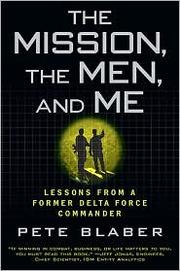 The Mission, The Men, and Me: Lessons from a Former Delta Force Commander Shares military, leadership, nonfiction
 -
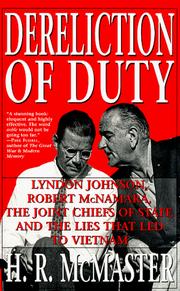 Dereliction of Duty: Lyndon Johnson, Robert McNamara, the Joint Chiefs of Staff, and the Lies That Led to Vietnam Shares military, history, nonfiction
 -
 Leadership: The Warrior's Art Shares military, leadership, military history