A Meaningful World: How the Arts and Sciences Reveal the Genius of Nature
Sign in to keep track of books you’ve read and want to read.
Meaningful or meaningless? Purposeful or pointless? When we look at nature, whether at our living earth or into deepest space, what do we find? In stark contrast to contemporary claims that the world is meaningless, Benjamin Wiker and Jonathan Witt reveal a cosmos charged with both meaning and purpose. Their journey begins with Shakespeare and ranges through Euclid's geometry, the fine-tuning of the laws of physics, the periodic table of the elements, the artistry of ordinary substances like carbon and water, the intricacy of biological organisms, and the irreducible drama of scientific exploration itself. Along the way, Wiker and Witt fashion a robust argument from evidence in nature, one that rests neither on religious presuppositions nor on a simplistic view of nature as the best of all possible worlds. In their exploration of the cosmos, Wiker and Witt find all the challenges and surprises, all of the mystery and elegance one expects from a work of genius.
Liked A Meaningful World: How the Arts and Sciences Reveal the Genius of Nature? Here’s where I’d start.
These suit anyone who liked A Meaningful World: How the Arts and Sciences Reveal the Genius of Nature. Sign in and mark a few books for picks shaped around your own taste.
-
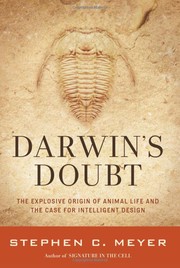 Darwin's Doubt: The Explosive Origin of Animal Life and the Case for Intelligent Design Shares science, apologetics, intelligent design
 -
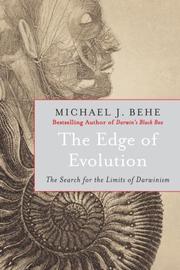 The Edge of Evolution: The Search for the Limits of Darwinism Shares science, intelligent design, apologetics
 -
 The Politically Incorrect Guide to Darwinism and Intelligent Design Shares science, intelligent design, apologetics
 -
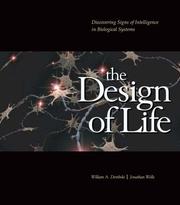 The Design of Life: Discovering Signs of Intelligence in Biological Systems Shares intelligent design, science, nonfiction