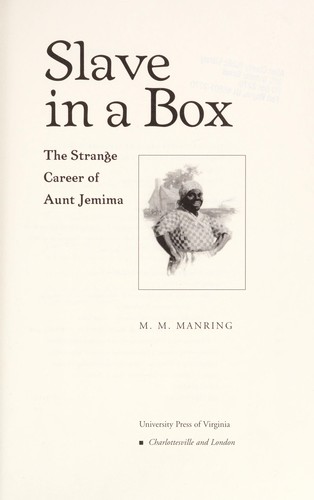
Slave in a Box: The Strange Career of Aunt Jemima
Sign in to keep track of books you’ve read and want to read.
In "Slave in a Box," M. M. Manring investigates why the troubling figure of Aunt Jemima has endured in American culture. The author traces the evolution of the mammy from her roots in Old South slave reality and mythology, through reinterpretations during Reconstruction and in minstrel shows and turn-of-the-century advertisements, to Aunt Jemima's symbolic role in the Civil Rights movement and her present incarnation as a 'working grandmother.' The reader learns how advertising entrepreneur James Webb Young, aided by celebrated illustrator N. C. Wyeth, skillfully tapped into nostalgic 1920s perceptions of the South as a culture of white leisure and black labor. Aunt Jemima's ready-mixed products offered middle-class housewives the next best thing to a black servant: a 'slave in a box' that conjured up romantic images of not only the food but also the social hierarchy of the plantation South.
Liked Slave in a Box: The Strange Career of Aunt Jemima? Here’s where I’d start.
These suit anyone who liked Slave in a Box: The Strange Career of Aunt Jemima. Sign in and mark a few books for picks shaped around your own taste.
-
 Eating Right in America: The Cultural Politics of Food and Health Shares food studies, nonfiction, food
 -
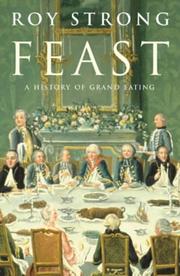 Feast: A History of Grand Eating Shares food, food studies, nonfiction
 -
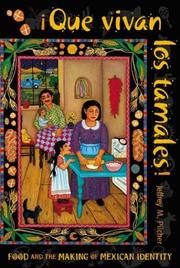 Que Vivan Los Tamales!: Food and the Making of Mexican Identity Shares food, food studies, nonfiction
 -
 Chop Suey, USA: The Story of Chinese Food in America Shares nonfiction, food, food studies