The Access Principle: The Case for Open Access to Research and Scholarship
Sign in to keep track of books you’ve read and want to read.
Questions about access to scholarship go back farther than recent debatesover subscription prices, rights, and electronic archives suggest. The greatlibraries of the past — from the fabled collection at Alexandria to the earlypublic libraries of nineteenth-century America — stood as arguments for increasingaccess. In The Access Principle, John Willinsky describes the latest chapter in thisongoing story — online open access publishing by scholarly journals — and makes acase for open access as a public good.A commitment to scholarly work, writesWillinsky, carries with it a responsibility to circulate that work as widely aspossible: this is the access principle. In the digital age, that responsibilityincludes exploring new publishing technologies and economic models to improve accessto scholarly work. Wide circulation adds value to published work; it is asignificant aspect of its claim to be knowledge. The right to know and the right tobe known are inextricably mixed. Open access, argues Willinsky, can benefit both aresearcher-author working at the best-equipped lab at a leading research universityand a teacher struggling to find resources in an impoverished high school.Willinskydescribes different types of access — the New England Journal of Medicine, forexample, grants open access to issues six months after initial publication, andFirst Monday forgoes a print edition and makes its contents immediately accessibleat no cost. He discusses the contradictions of copyright law, the reading ofresearch, and the economic viability of open access. He also considers broaderthemes of public access to knowledge, human rights issues, lessons from publishinghistory, and "epistemological vanities." The debate over open access, writesWillinsky, raises crucial questions about the place of scholarly work in a largerworld — and about the future of knowledge.
Liked The Access Principle: The Case for Open Access to Research and Scholarship? Here’s where I’d start.
These suit anyone who liked The Access Principle: The Case for Open Access to Research and Scholarship. Sign in and mark a few books for picks shaped around your own taste.
-
 I Think You're Totally Wrong: A Quarrel Shares nonfiction, academia
-
 Intellectual Freedom Manual Shares mlis, nonfiction
-
 All Facts Considered: The Essential Library of Inessential Knowledge Shares nonfiction, mlis
-
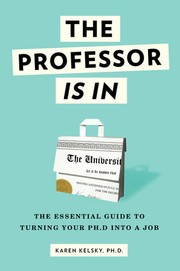 The Professor Is In: The Essential Guide To Turning Your Ph.D. Into a Job Shares nonfiction, academia, research