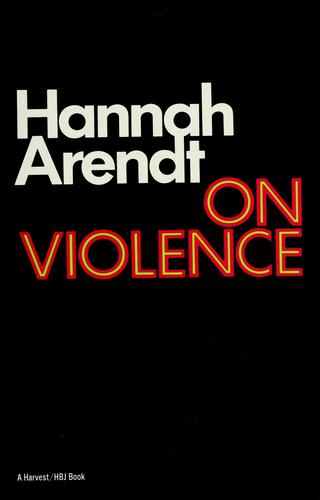
On Violence
Sign in to keep track of books you’ve read and want to read.
An analysis of the nature, causes, and significance of violence in the second half of the twentieth century. Arendt also reexamines the relationship between war, politics, violence, and power.
Read more
"Incisive, deeply probing, written with clarity and grace, it provides an ideal framework for understanding the turbulence of our times."
The Nation
Liked On Violence? Here’s where I’d start.
These suit anyone who liked On Violence. Sign in and mark a few books for picks shaped around your own taste.
-
 The Open Society and Its Enemies - Volume One: The Spell of Plato Shares philosophy, nonfiction, politics
 -
 Remnants of Auschwitz: The Witness and the Archive Shares philosophy, nonfiction, theory
 -
 The Social Contract and Discourses Shares philosophy, nonfiction, politics
 -
 Political Theology: Four Chapters on the Concept of Sovereignty Shares philosophy, political theory, politics