God and Ronald Reagan: A Spiritual Life
Sign in to keep track of books you’ve read and want to read.
Ronald Reagan is hailed today for a presidency that restored optimism to America, engendered years of economic prosperity, and helped bring about the fall of the Soviet Union. Yet until now little attention has been paid to the role Reagan's personal spirituality played in his political career, shaping his ideas, bolstering his resolve, and ultimately compelling him to confront the brutal — and, not coincidentally, atheistic — Soviet empire.
Read more
In this groundbreaking book, political historian Paul Kengor draws upon Reagan's legacy of speeches and correspondence, and the memories of those who knew him well, to reveal a man whose Christian faith remained deep and consistent throughout his more than six decades in public life. Raised in the Disciples of Christ Church by a devout mother with a passionate missionary streak, Reagan embraced the church after reading a Christian novel at the age of eleven. A devoted Sunday-school teacher, he absorbed the church's model of "practical Christianity" and strived to achieve it in every stage of his life.
But it was in his lifelong battle against communism — first in Hollywood, then on the political stage — that Reagan's Christian beliefs had their most profound effect. Appalled by the religious repression and state-mandated atheism of Bolshevik Marxism, Reagan felt called by a sense of personal mission to confront the USSR. Inspired by influences as diverse as C.S. Lewis, Whittaker Chambers, and Aleksandr Solzhenitsyn, he waged an openly spiritual campaign against communism, insisting that religious freedom was the bedrock of personal liberty. "The source of our strength in the quest for human freedom is not material, but spiritual," he said in his Evil Empire address. "And because it knows no limitation, it must terrify and ultimately triumph over those who would enslave their fellow man."
From a church classroom in 1920s Dixon, Illinois, to his triumphant mission to Moscow in 1988, Ronald Reagan was both political leader and spiritual crusader. God and Ronald Reagandeepens immeasurably our understanding of how these twin missions shaped his presidency — and changed the world.
Liked God and Ronald Reagan: A Spiritual Life? Here’s where I’d start.
These suit anyone who liked God and Ronald Reagan: A Spiritual Life. Sign in and mark a few books for picks shaped around your own taste.
-
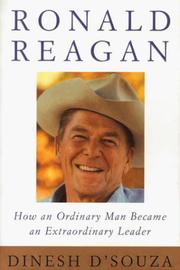 Ronald Reagan: How an Ordinary Man Became an Extraordinary Leader Shares biography, reagan, politics
 -
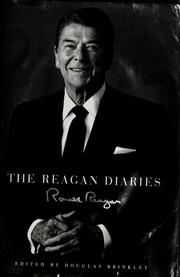 The Reagan Diaries Shares biography, history, nonfiction
 -
 A Different Drummer: My Thirty Years with Ronald Reagan Shares biography, reagan, history
 -
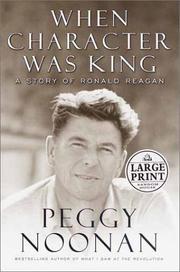 When Character Was King: A Story of Ronald Reagan Shares biography, nonfiction, history
“People who read God and Ronald Reagan: A Spiritual Life tend to reach for these next.”
-
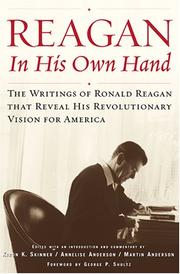 Reagan, In His Own Hand: The Writings of Ronald Reagan that Reveal His Revolutionary Vision for America
-
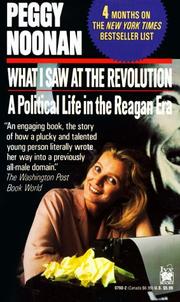 What I Saw at the Revolution: A Political Life in the Reagan Era
-
 Reagan's War: The Epic Story of His Forty Year Struggle and Final Triumph Over Communism
-
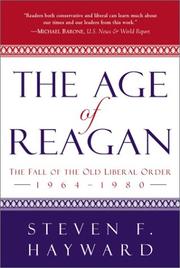 The Age of Reagan: The Fall of the Old Liberal Order, 1964-1980