Materials Science and Engineering: An Introduction
Sign in to keep track of books you’ve read and want to read.
* Clear and concise discussions This text has received many accolades for its ability to clearly and concisely convey materials science and engineering concepts at an appropriate level to ensure student understanding. For examples see chapters 3, 4, 5 and 9.
Read more
* Mechanical property coverage The Sixth Edition maintains its extensive, introductory level coverage of mechanical properties and failure—the most important materials considerations for many engineers. For examples see chapters 6, 7, & 8.
* A picture is worth 1000 words! The Sixth Edition judiciously and extensively makes use of illustrations and photographs. The approximate 500 figures include a large number of photographs that show the microstructure of various materials (e.g., Figures 9.12, 10.8, 13.12, 14.15 and 16.5).
* Current and up-to-date Students are presented with the latest developments in Material Science and Engineering. Such up-to-date content includes advanced ceramic and polymeric materials, composites, high-energy hard magnetic materials, and optical fibers in communications. For examples see sections 13.7, 15.19, 16.8, 20.9, and 21.14.
* Why study These sections at the beginning of each chapter provide the student with reasons why it is important to learn the material covered in the chapter.
* Learning objectives A brief list of learning objectives for each chapter states the key learning concepts for the chapter.
* Resources to facilitate the materials selection process. Appendix B, which contains 11 properties for a set of approximately 100 materials, is included which be used in materials selection problems. An additional resource, Appendix C, contains the prices for all materials listed in Appendix B.
* The text is packaged with a CD-ROM that contains 1) interactive software modules to enhance visualization of three-dimensional objects, 2) additional coverage of select topics, and 3) complete solutions to selected problems from the text in order to assist students in mastering problem-solving.
Liked Materials Science and Engineering: An Introduction? Here’s where I’d start.
These suit anyone who liked Materials Science and Engineering: An Introduction. Sign in and mark a few books for picks shaped around your own taste.
-
 Fundamentals of Heat and Mass Transfer Shares engineering, textbooks, mechanical engineering
 -
 Mechanics of Materials Shares engineering, textbooks, mechanical engineering
 -
 Numerical Methods for Engineers Shares textbooks, engineering, mechanical engineering
 -
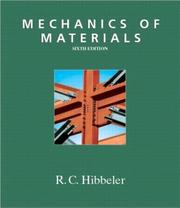 Mechanics of Materials Shares engineering, textbooks, mechanical engineering