Dictionary of Word Origins: Histories of More Than 8,000 English-Language Words
Sign in to keep track of books you’ve read and want to read.
The average English speaker knows 50,000 words in contemporary use - 25 more words than there are stars in the night sky visible to the naked eye. Yet stripped down to its origins, this apparently huge vocabulary is in reality a much smaller number of words from Latin, French and the Germanic languages. It is estimated that every year, 800 neologisms are added to the English language: acronyms - 'yuppie', blended words - 'motel', and those taken from foreign languages - 'savoir-faire'. The Bloomsbury Dictionary of Word Origins provides a concise history of over 8,000 of the most commonly used words. The range of information spans from derivations as simple as 'a' and 'one' from 'an', to historical relations between words which would be obscure to all but the most lexically-minded. For instance 'vice' with its several uses in English - a wickedness, a holding tool - is derived via Old French from two separate Latin words: 'vitium' (defect, offence), and 'vitis' (vine) which gave 'viticulture'. The Bloomsbury Dictionary of Word Origins demonstrates how the diverse influences on English have given rise to some unlikely but fascinating lexical relations. 'Bishop' had no ecclesiastical origins, but was in fact derived from the Greek 'episkopos', meaning 'overseer', and shares origins with 'spy'. In strict etymological terms, a 'dairy' should employ a female kneader of bread. Laid out in an A-Z format with detailed cross references, written in a style that is both authoritative and accessible, the Bloomsbury Dictionary of Word Origins is a valuable historical guide to the English language.
Liked Dictionary of Word Origins: Histories of More Than 8,000 English-Language Words? Here’s where I’d start.
These suit anyone who liked Dictionary of Word Origins: Histories of More Than 8,000 English-Language Words. Sign in and mark a few books for picks shaped around your own taste.
-
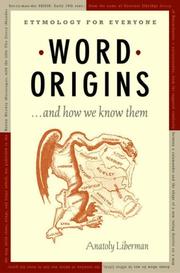 Word Origins ... and How We Know Them: Etymology for Everyone Shares language, nonfiction, etymology
-
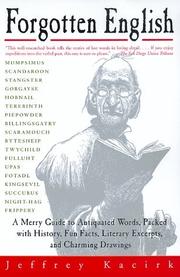 Forgotten English Shares language, nonfiction, history
-
 Cassell's Standard Latin Dictionary Shares language, nonfiction, linguistics
-
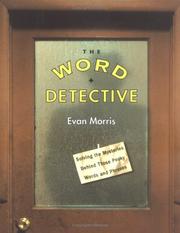 The Word Detective: Solving the Mysteries Behind Those Pesky Words and Phrases Shares language, nonfiction, etymology
“People who read Dictionary of Word Origins: Histories of More Than 8,000 English-Language Words tend to reach for these next.”

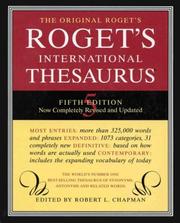

“If you want more of the same (history about writers), start with these.”


“If it was the language that hooked you, try one of these.”
-
 Spellbound: The Surprising Origins and Astonishing Secrets of English Spelling
-
 Unfortunate English: The Gloomy Truth Behind the Words You Use
-
 The Etymologicon: A Circular Stroll through the Hidden Connections of the English Language
-
 In Other Words: A Language Lover's Guide to the Most Intriguing Words Around the World