The New Central Asia: The Creation of Nations
Sign in to keep track of books you’ve read and want to read.
Praise for The Failure of Political Islam:
During the anti-Gorbachev coup in August 1991 most communist leaders from Soviet central Asia backed the plotters. Within weeks of the coup's collapse, those same leaders—now transformed into ardent nationalists—proclaimed the independence of their nations, adopted new flags and new slogans, and discovered a new patriotism.
Read more
How were these new nations built, among peoples without any traditional nationalist heritage and no history of independent governance? Olivier Roy argues that Soviet practice had always been to build on local institutions and promote local elites, and that Soviet administration—as opposed to Soviet rhetoric—was always surprisingly decentralized in the far-flung corners of the empire. Thus, with home-grown political leaders and administrative institutions, national identities in central Asia emerged almost by stealth.
Roy's analysis of the new states in central Asia—Kazakhstan, Turkmenistan, Uzbekistan, Tadjikstan, Kirghizstan and Azerbaijan—provides a glimpse of the future of an increasingly fragmented and dangerous region.
Liked The New Central Asia: The Creation of Nations? Here’s where I’d start.
These suit anyone who liked The New Central Asia: The Creation of Nations. Sign in and mark a few books for picks shaped around your own taste.
-
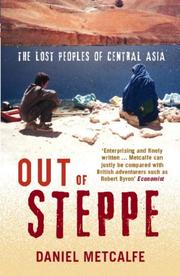 Out of Steppe: The Lost Peoples of Central Asia Shares Central Asia, nonfiction, history
 -
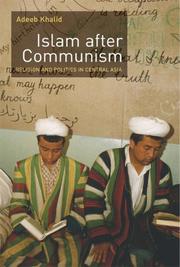 Islam after Communism: Religion and Politics in Central Asia Shares Central Asia, history, nonfiction
 -
 Mission To Tashkent Shares Central Asia, history, Russia
 -
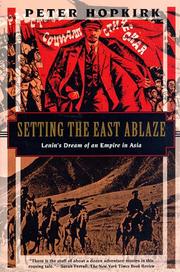 Setting the East Ablaze: Lenin's Dream of an Empire in Asia Shares Central Asia, history, Russia