
Blaming the Victim
Sign in to keep track of books you’ve read and want to read.
In this 1971 book, psychologist William Ryan examines a habit of thought he calls blaming the victim. When American society confronts problems such as poverty, poor health and urban unrest, the explanation offered too often locates the cause in the people who suffer them: their supposed deficiencies, their culture, their failings. Ryan argues that this way of reasoning hides the social and economic conditions that actually produce these problems, and that it serves to protect the existing order. He tests the idea against the way public debate of the 1960s framed questions of race and inequality, and he asks readers to look at the structures behind the statistics rather than at the people who appear in them. The book became a landmark of social criticism and gave a phrase to the wider debate.
Liked Blaming the Victim? Here’s where I’d start.
These suit anyone who liked Blaming the Victim. Sign in and mark a few books for picks shaped around your own taste.
-
 Indivisible by Two: Lives of Extraordinary Twins Shares nonfiction, psychology, sociology
-
 Selfie: How We Became So Self-Obsessed and What It's Doing to Us Shares nonfiction, psychology, sociology
-
 Remotely Controlled: How Television is Damaging Our Lives Shares nonfiction, psychology, sociology
-
 America the Possible: Manifesto for a New Economy Shares nonfiction
“People who read Blaming the Victim tend to reach for these next.”


“If you want more of the same (psychology about social issues), start with these.”



“If it was the sociology that hooked you, try one of these.”
-
 The Lonely American: Drifting Apart in the Twenty-first Century
-
 Snoop: What Your Stuff Says About You
-
 The Narcissist Next Door: Understanding the Monster in Your Family, in Your Office, in Your Bed--in Your World
-
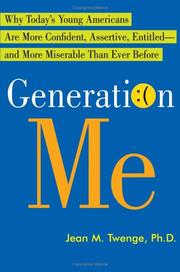 Generation Me: Why Today's Young Americans Are More Confident, Assertive, Entitled--and More Miserable Than Ever Before


