An Introduction to Cybernetics
Sign in to keep track of books you’ve read and want to read.
An Introduction to Cybernetics sets out the core ideas of a new discipline that was then reshaping science and engineering: the study of control, communication and feedback in machines, living things and organisations alike. William Ross Ashby builds his argument step by step, starting from the basic notion of a system and its states, then moving through feedback, stability and the way regulators keep a system within bounds. He introduces the mathematical tools he needs as he goes, and treats the subject as a way of thinking rather than a bundle of gadgets. Readers with a background in mathematics, engineering or biology will find it a rigorous and patient guide to the field's foundations.
Liked An Introduction to Cybernetics? Here’s where I’d start.
These suit anyone who liked An Introduction to Cybernetics. Sign in and mark a few books for picks shaped around your own taste.
-
 The Cybernetic Brain: Sketches of Another Future Shares cybernetics, science
-
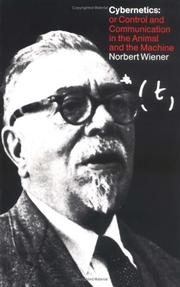 Cybernetics: or the Control and Communication in the Animal and the Machine Shares cybernetics, science, math
-
 Dark Hero of the Information Age: In Search of Norbert Wiener, The Father of Cybernetics Shares cybernetics, science, math
-
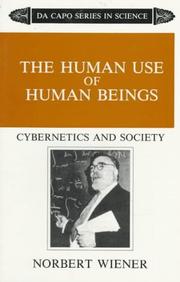 The Human Use Of Human Beings: Cybernetics And Society Shares cybernetics, science, computing