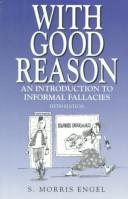
With Good Reason: An Introduction to Informal Fallacies
Sign in to keep track of books you’ve read and want to read.
A concise, easy-to-read introduction to informal logic, With Good Reasonoffers both comprehensive coverage of informal fallacies and an abundance of engaging examples of both well-conceived and faulty arguments. A long-time favorite of both students and instructors, the text continues in its sixth edition to provide an abundance of exercises that help students identify, correct, and avoid common errors in argumentation.
Liked With Good Reason: An Introduction to Informal Fallacies? Here’s where I’d start.
These suit anyone who liked With Good Reason: An Introduction to Informal Fallacies. Sign in and mark a few books for picks shaped around your own taste.
-
 Introduction to Logic Shares logic, philosophy, nonfiction
-
Informal Logic: A Handbook for Critical Argument Shares logic, philosophy, nonfiction
-
 Logically Fallacious: The Ultimate Collection of Over 300 Logical Fallacies Shares logic, philosophy, nonfiction
-
 Nonsense: Red Herrings, Straw Men and Sacred Cows: How We Abuse Logic in Our Everyday Language Shares logic, philosophy, nonfiction