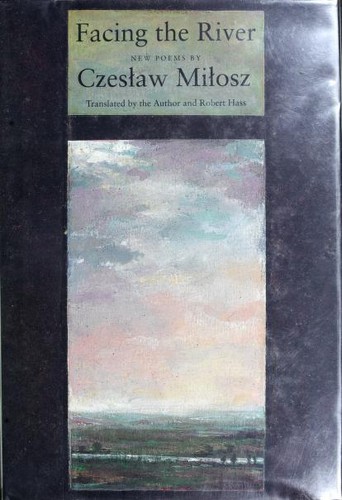
Facing The River
Sign in to keep track of books you’ve read and want to read.
Czeslaw Milosz did not believe he would ever return to the river valley in which he grew up. But in the spring of 1989, exactly fifty years after he left, the new government of independent Lithuania welcomed him back to that magical region of his childhood. Many of the poems in Facing the Riverrecord his experiences there, where the river of the Issa Valley symbolizes the river of time as well as the river of mythology, over which one cannot step twice. This is the river Milosz faces while exploring ancient themes. He reflects upon the nature of imagination, human experience, good and evil—and celebrates the wonders of life on earth.
Read more
In these later poems, the poems of older age, this Nobel laureate takes a long look back at the catastrophic upheavals of the twentieth century; yet despite the soberness of his themes, he writes with the lightness of touch found only in the great masters.
Liked Facing The River? Here’s where I’d start.
These suit anyone who liked Facing The River. Sign in and mark a few books for picks shaped around your own taste.